
Trekking with Saharan nomads
Nine days on foot with a camel caravan, from M'Hamid into Erg Chigaga.

- Duration
- 9 days
- Group size
- 7–12 travellers
- Operating window
- 20–28 March 2027
- The departure
- Sat, 20 Mar 2027
- Gateway
- Marrakech (RAK)
- Remoteness
- Deep
- Self-reliance
- Supported
- Comfort
- Wild
- Environment
- Desert
How to read these
These terms compare trips across Atlas51. Environment describes terrain, not difficulty.
Remoteness
Edge
Established support remains relatively close.
Deep
Help or an exit may take time.
Extreme
Help and an exit may be days away.
Self-reliance
Supported
The crew runs the core systems.
Shared
You take on part of the work.
Self-reliant
Your skills and decisions are central.
Comfort
Basic
A roof every night.
Wild
Camped, with camp made for you.
Spartan
You build your own shelter.
Environment
Desert
Sand, rock and arid ground.
Arctic
Snow, ice and sustained cold.
Jungle
Dense, humid forest.
Mountain
Steep, high or broken ground.
Inland water
Rivers, lakes and wetlands.
Ocean
Open-coast or offshore water.
Forest
Woodland and trail terrain.
Steppe
Open grassland with few trees.
Savanna
Warm grassland with scattered trees.
Reef
Shallow coastal water and coral ground.
Mixed
Several distinct terrains in one trip.
A good fit if
You want the undertaking, not just the backdrop
- 01
Enjoy walking for the experience rather than rushing towards the destination.
- 02
Find the idea of complete disconnection genuinely exciting.
- 03
Prefer stories over souvenirs.
- 04
Think a camel caravan sounds more appealing than a tour bus.
- 05
Want to experience one of the world's largest wildernesses the old-fashioned way.
The trip
The places, the people and the route
Journey
A route that has run before and can run again.
Within a few hours of leaving M'Hamid, the modern world disappears.
The camels carry the camp. You walk, under some of the darkest skies on earth, and after the first day there is no road.
Because it's the biggest hot desert in the world. Because there are very few places left where you can walk for a solid week and see no sign of a road. Because silence has become one of the rarest things on Earth. Because staring into a campfire beneath a sky full of stars beats staring into a phone screen.
Because the Sahara isn't something you "do" on a day trip from Marrakech or Cairo — it's something you experience over a prolonged period of time.
This is one of the last places on Earth where life still operates to rhythms far older than schedules, push notifications and meetings. A place where the weather matters, distance matters, and where carrying only what you need suddenly feels like a very sensible way to live.
South of the Atlas Mountains sits the settlement of M'Hamid, the final paved road before the Sahara. For centuries this has been where caravans assembled before vanishing into the desert. We begin at "The Road's End", marking the end of the paved N9 highway; south of M'Hamid the path turns into sand tracks and desert terrain takes over.
After travelling down from Marrakech through the spectacular Draa Valley, we'll spend one final night in comfort before meeting our nomadic support team and getting the layout of the week ahead.
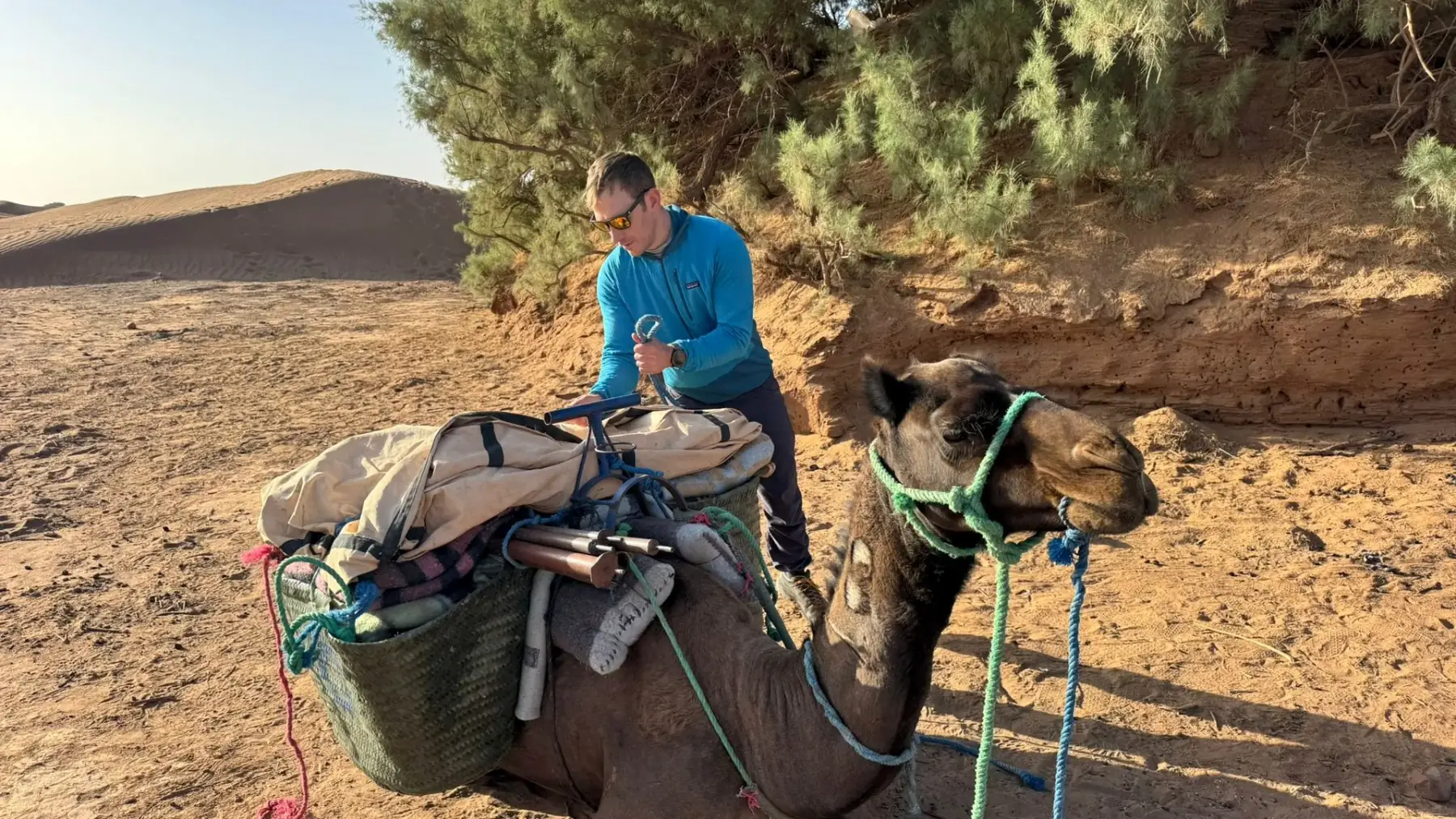
The next morning the camels are loaded, the tents are packed and we start walking. Everything we don't immediately need is carried by camel throughout the trip.
Within a few hours of leaving M'Hamid, the modern world disappears. Phone signals disappear. Roads vanish. Noise quietens. The only things left are desert, sky and the occasional moody-looking camel.
Over the following days we trek through an ever-changing landscape. We cross rolling dunes where every step sinks into soft sand. Wander through scattered tamarisk groves. Traverse black volcanic hamada stretching to the horizon. Walk across ancient immense dried lakebeds.
Further into Iriqui National Park, the scale becomes difficult to get your head around. The giant dunes of Erg Chigaga dominate the horizon before gradually giving way to endless open floodplains, dry riverbeds and ancient desert plateaus. Shade becomes a luxury. Distances become impossible to judge. Mirages shimmer across the landscape.
Every evening, camp appears. While we sit around fires eating dinner, the support team transforms an empty patch of desert into a functioning campsite. Then darkness falls, and the stars arrive. No city lights. No aircraft. Just one of the darkest skies on Earth.
Towards the latter stages of the journey the desert changes again. Ancient mesas rise from the plains like giant stone ships stranded in a sea of sand. Fossils litter the ground beneath our feet, reminders that this vast wilderness was once submerged beneath an ancient ocean.
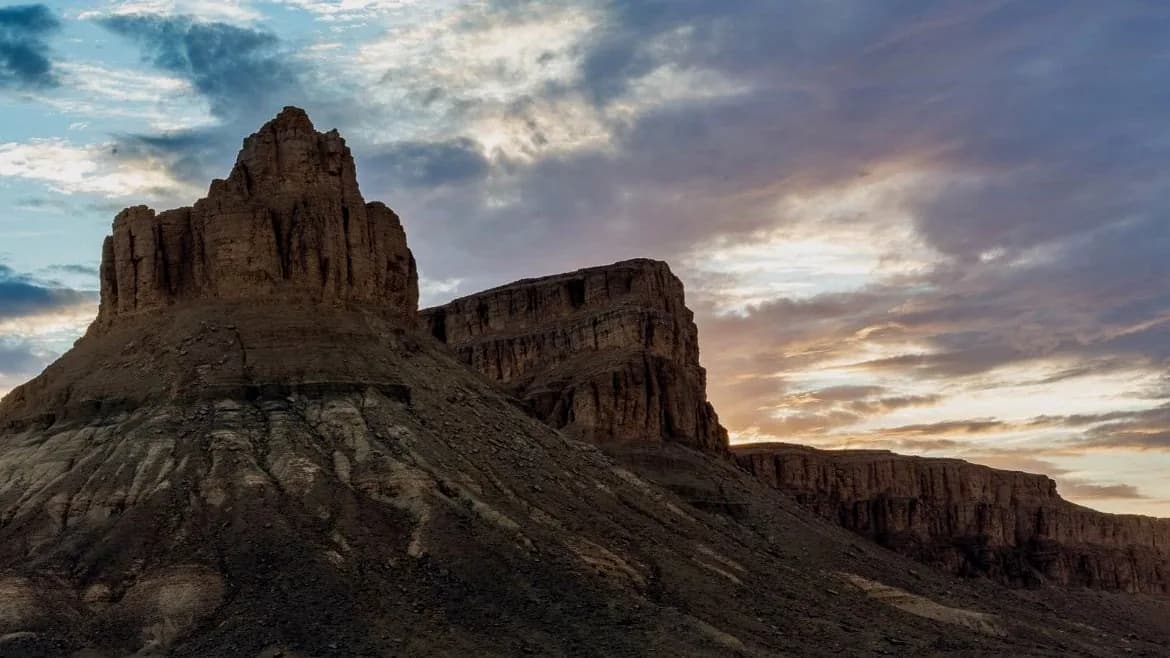
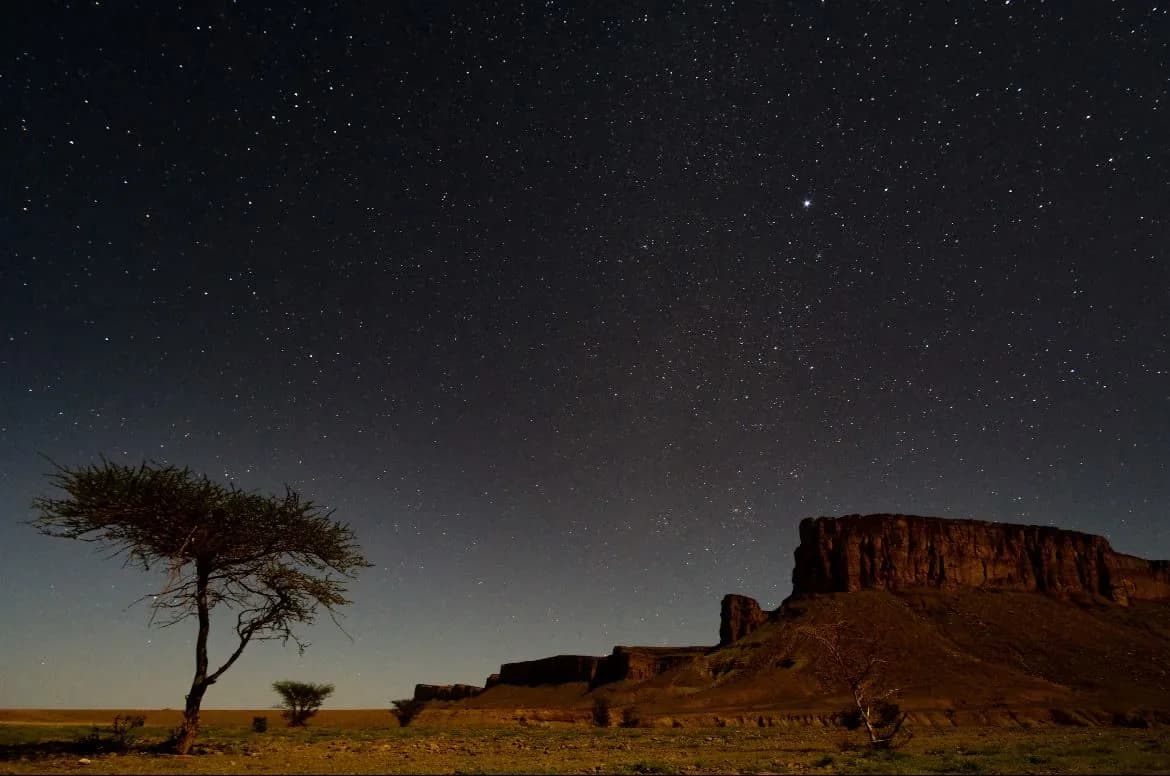
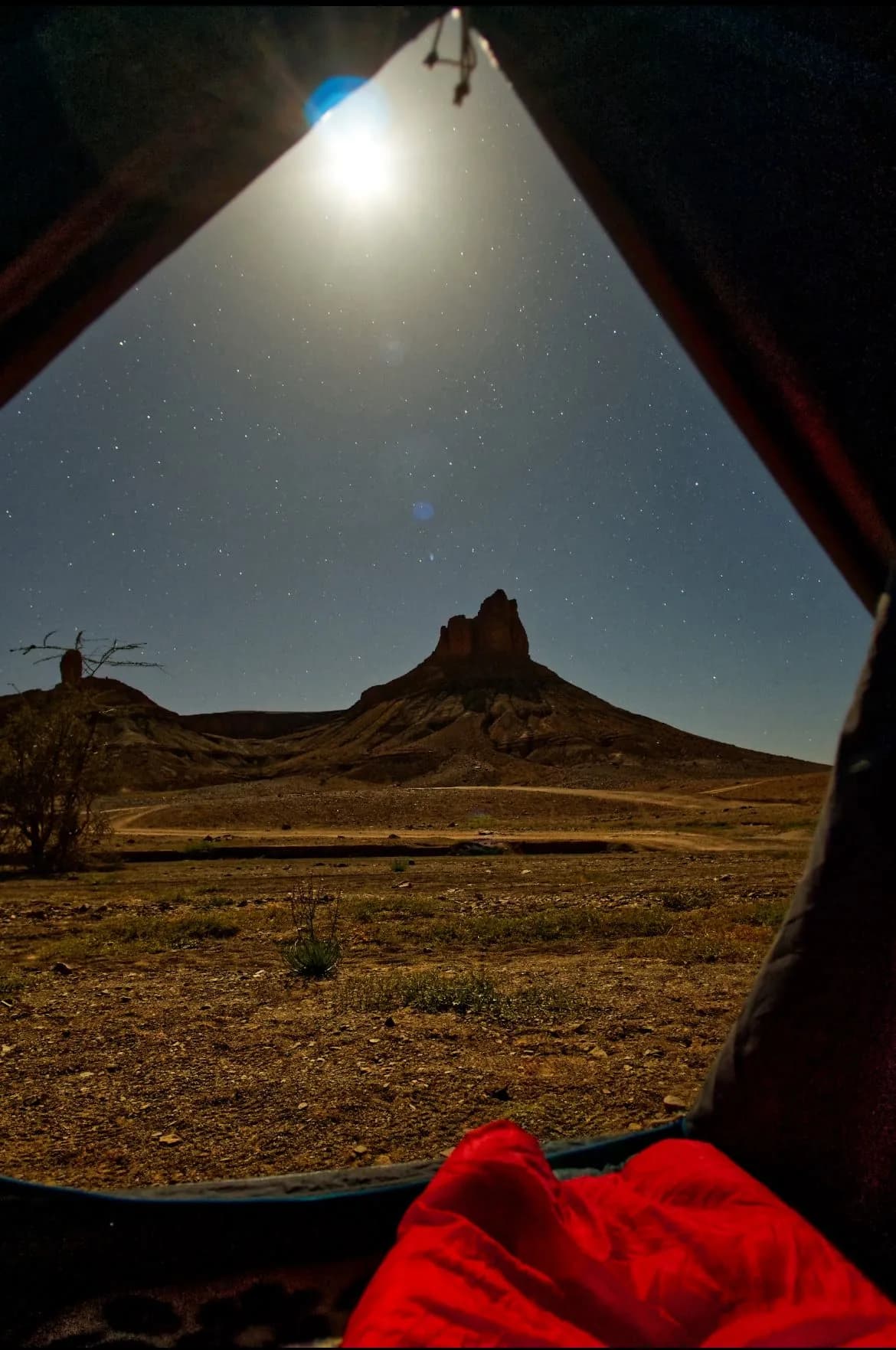
If conditions allow, we'll scramble to the summit of one of these formations and spend the night sleeping beneath the stars. We'll spend our final evening at the Kasbah Tizourgane before making our way back to Marrakech.
The trip is supported by experienced local teams who understand the terrain, weather, wildlife and realities of desert travel. Routes may change depending on local advice, weather conditions or safety considerations. Flexibility is part of the experience. Good judgement always comes first.
A typical day
The shape of the days
A slow desert rhythm, measured in footsteps, changing light and nights beneath a huge sky.
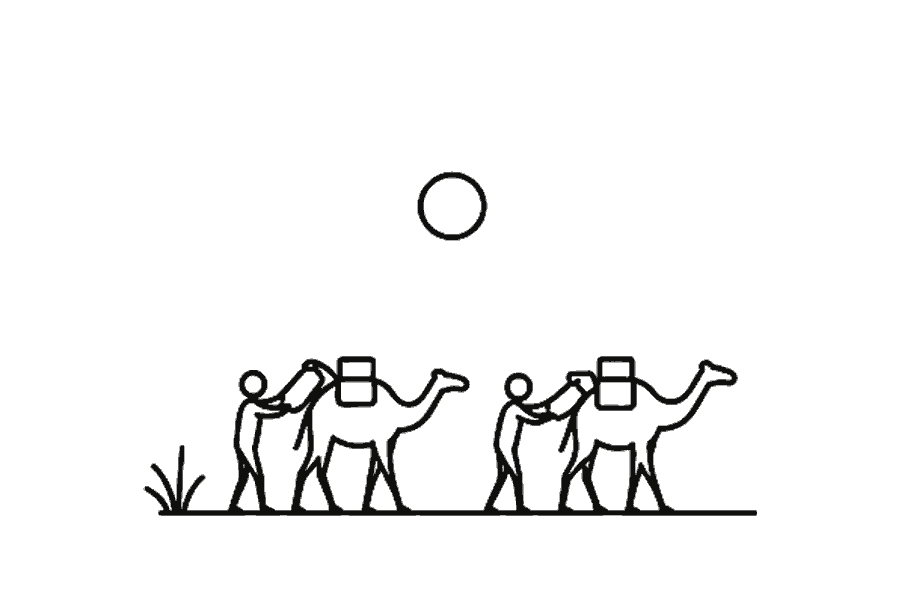
Walk before the heat
Wake around seven as the desert begins to warm. Eat, wash and organise a small day bag while the camel team loads the main luggage, camp equipment, food and water, then set off on foot before the heat builds.
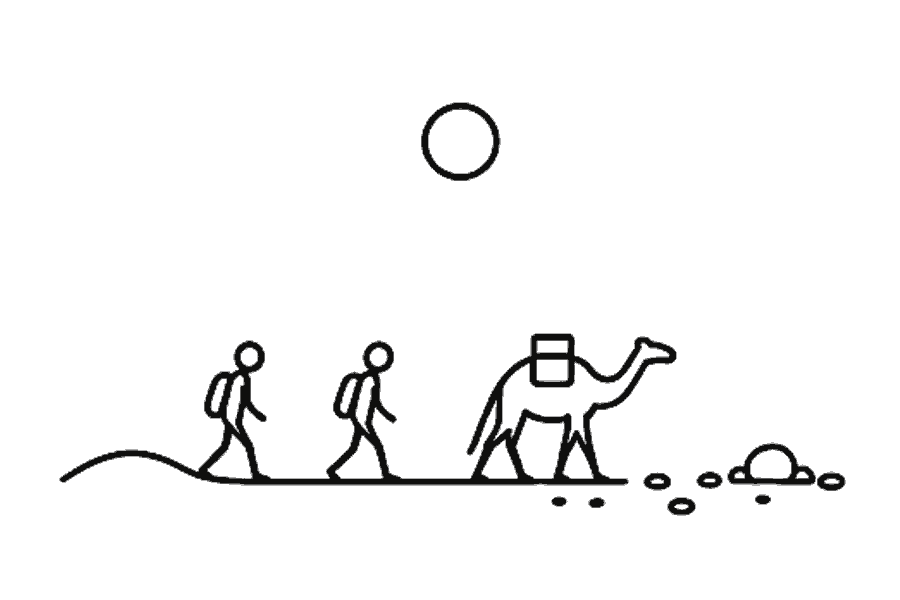
Cross a changing Sahara
Walk at a steady pace through dunes, tamarisk groves, volcanic hamada, dried lakebeds and the open spaces of Iriqui National Park. Stop for lunch and shade when available, then continue without rushing the landscape.
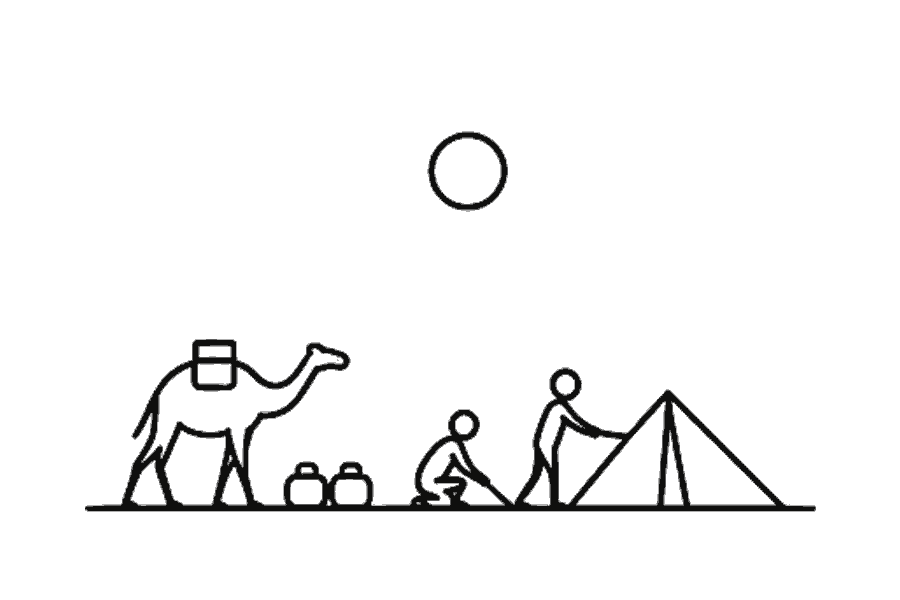
Make camp in the light
Reach a suitable place among the dunes, plains or plateaux and help turn an empty patch of Sahara into camp. Wash, change and relax while dinner is prepared, then gather at the fire as the colour drains from the desert.
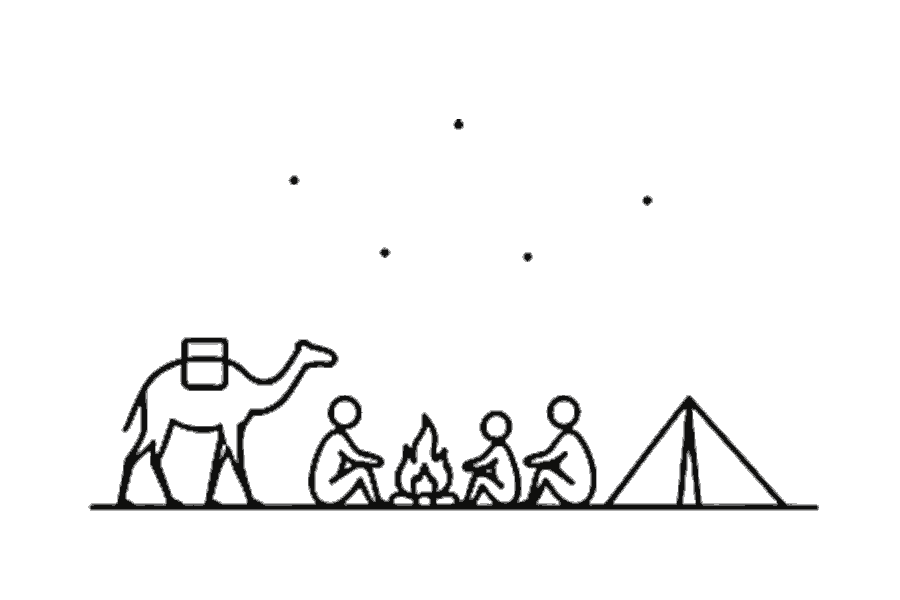
Let the stars take over
Sit by the fire, talk, journal or simply enjoy the silence. Tents are available when needed and, if conditions allow, there may be a chance to sleep beneath the stars before the camp wakes and moves again.
From the field
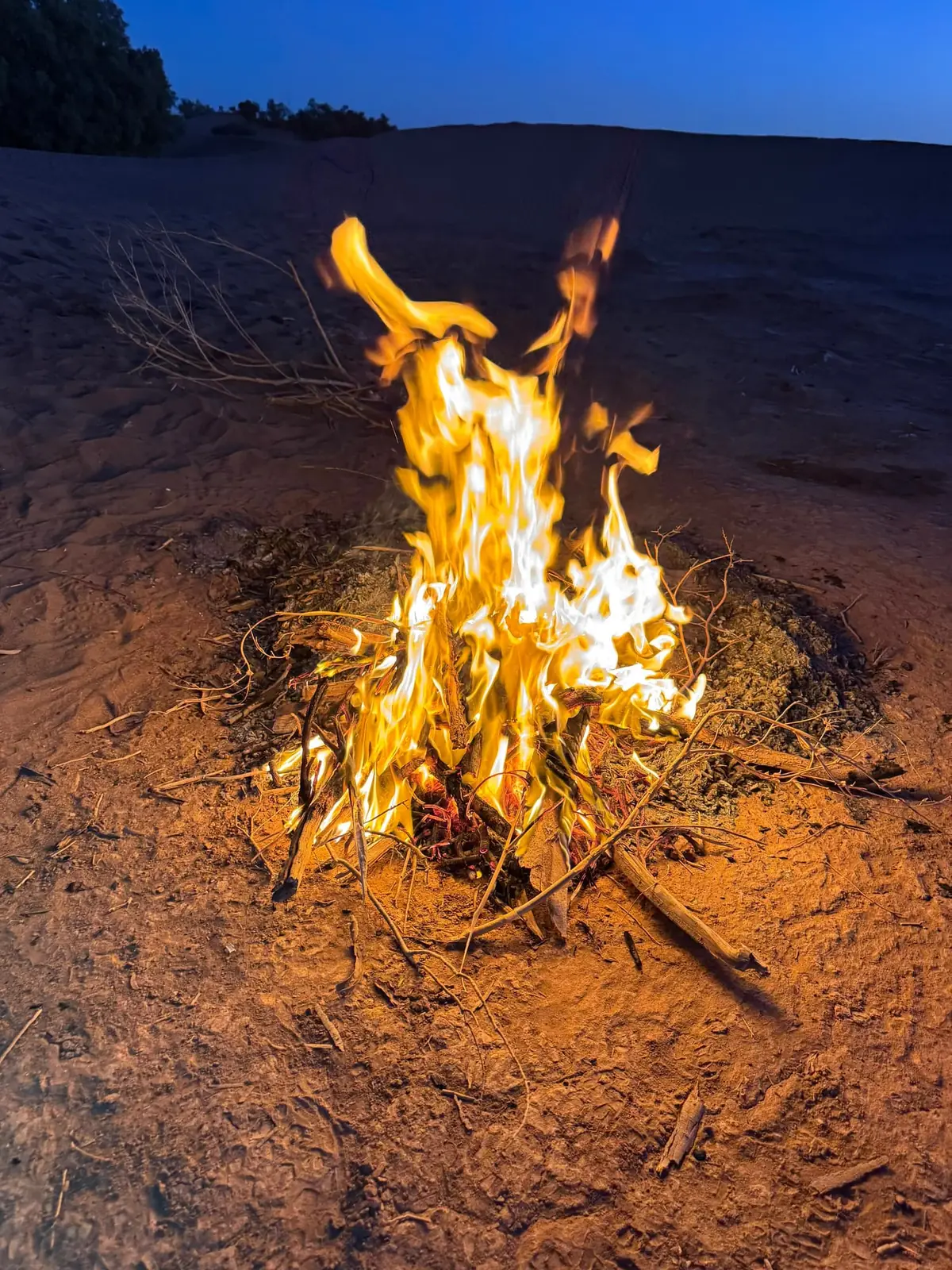
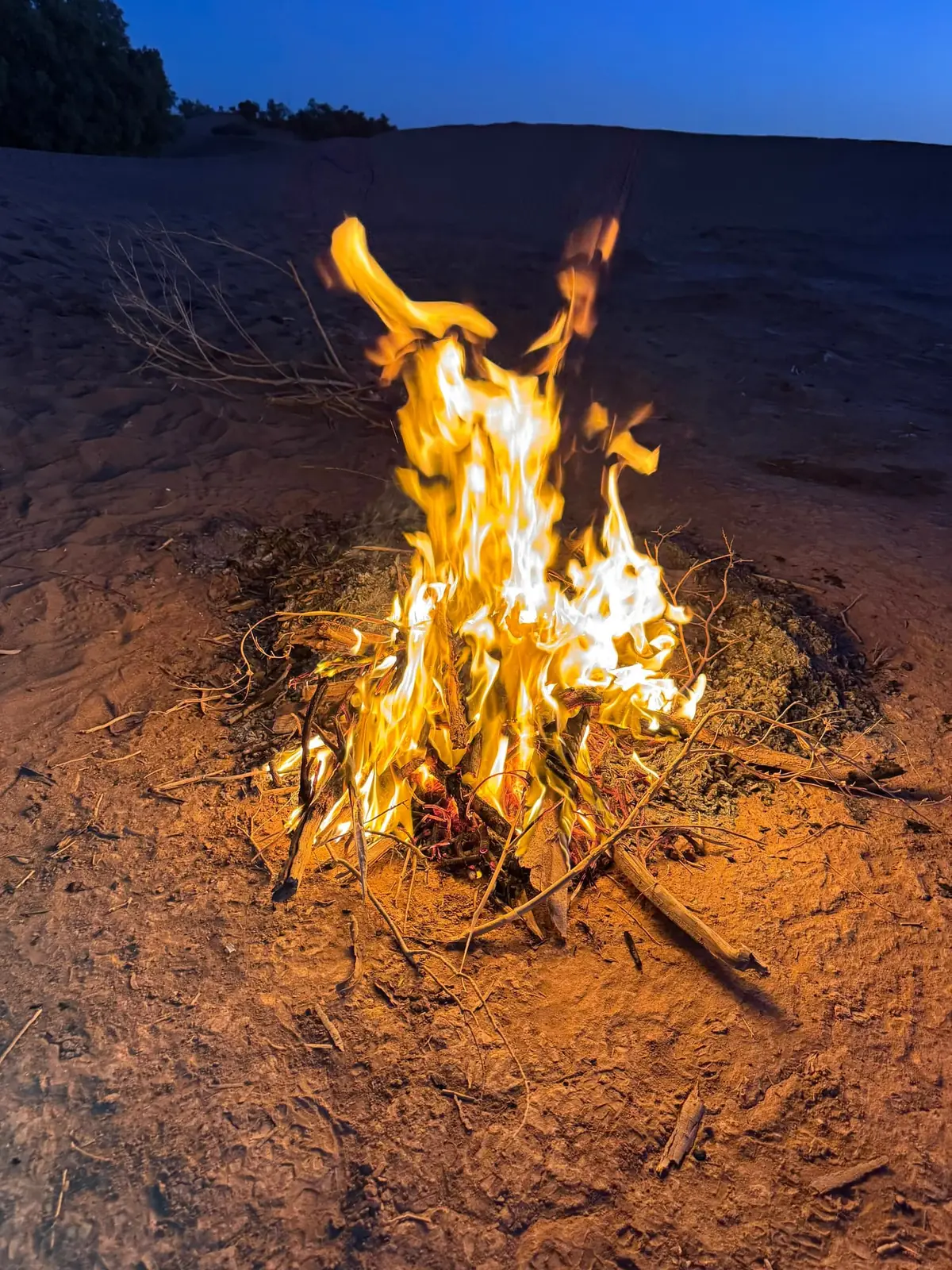 Thin sticks burning down on the sand you are camped on. Once the sun goes, this is the only light at camp.
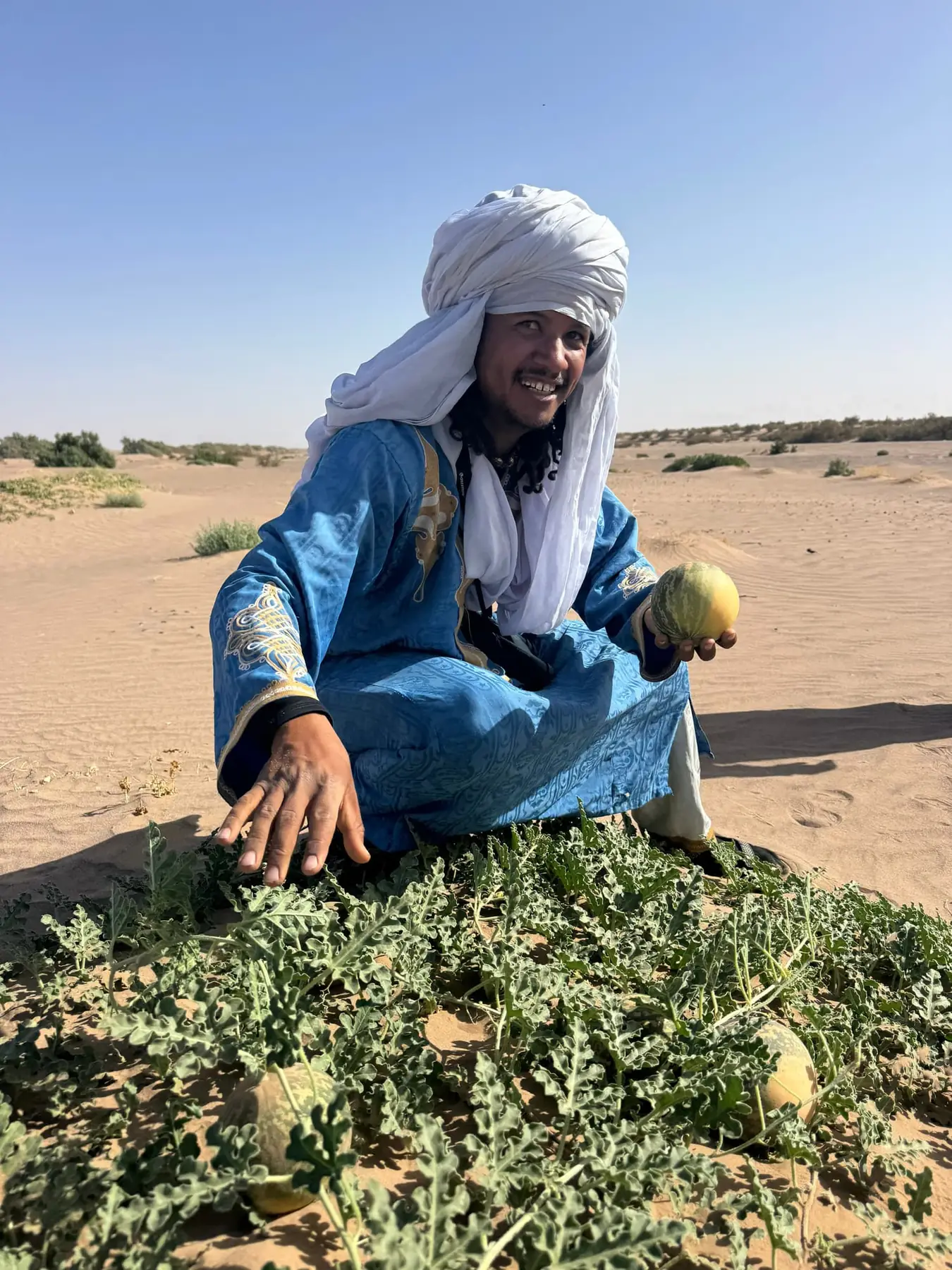 A hand-sized fruit growing flat on open sand. The nomadic team walks the whole crossing with you, reading the ground as they go.
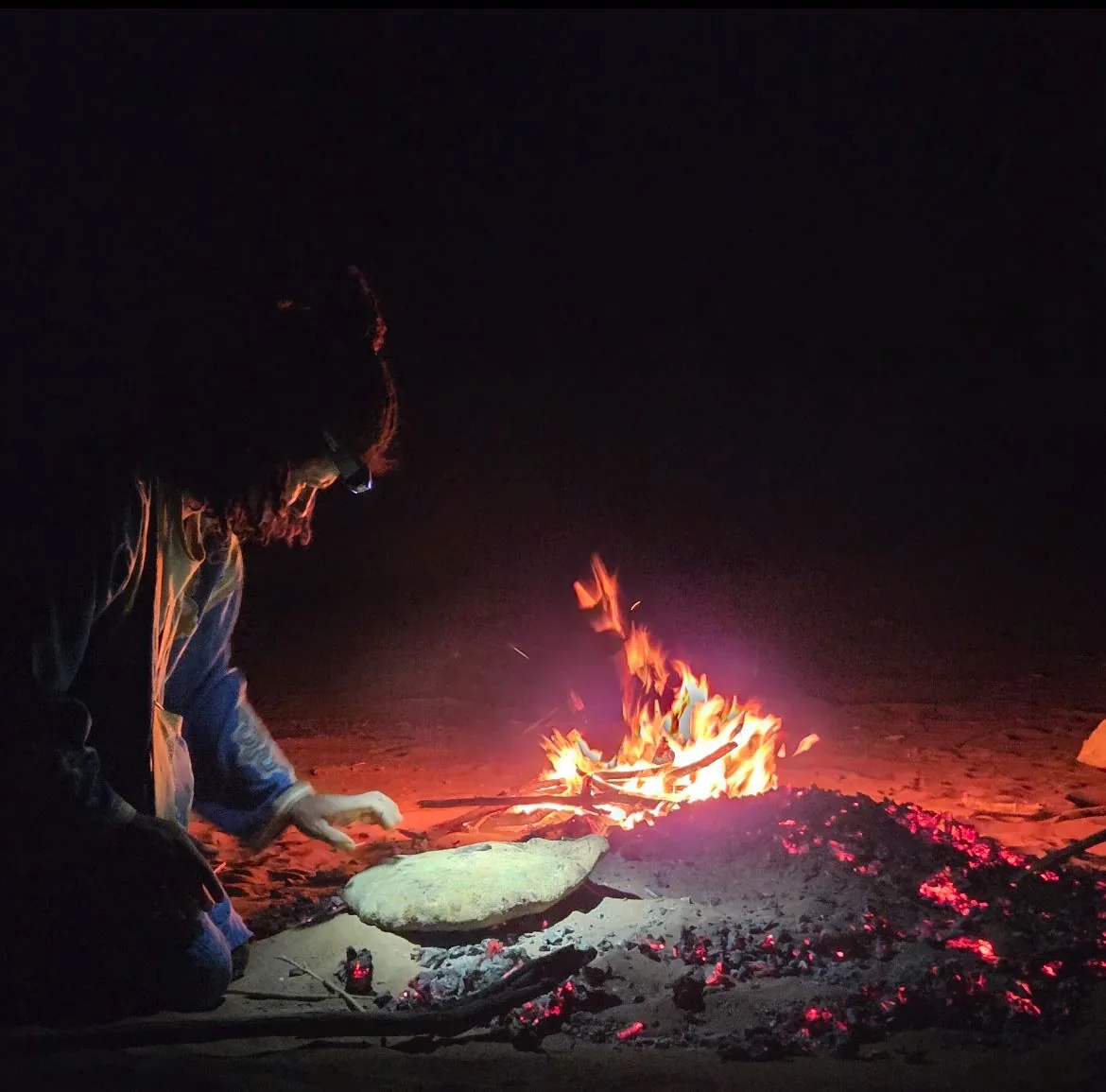 Bread cooked on the sand beside the coals. Every meal on the crossing is made wherever the group stops walking.
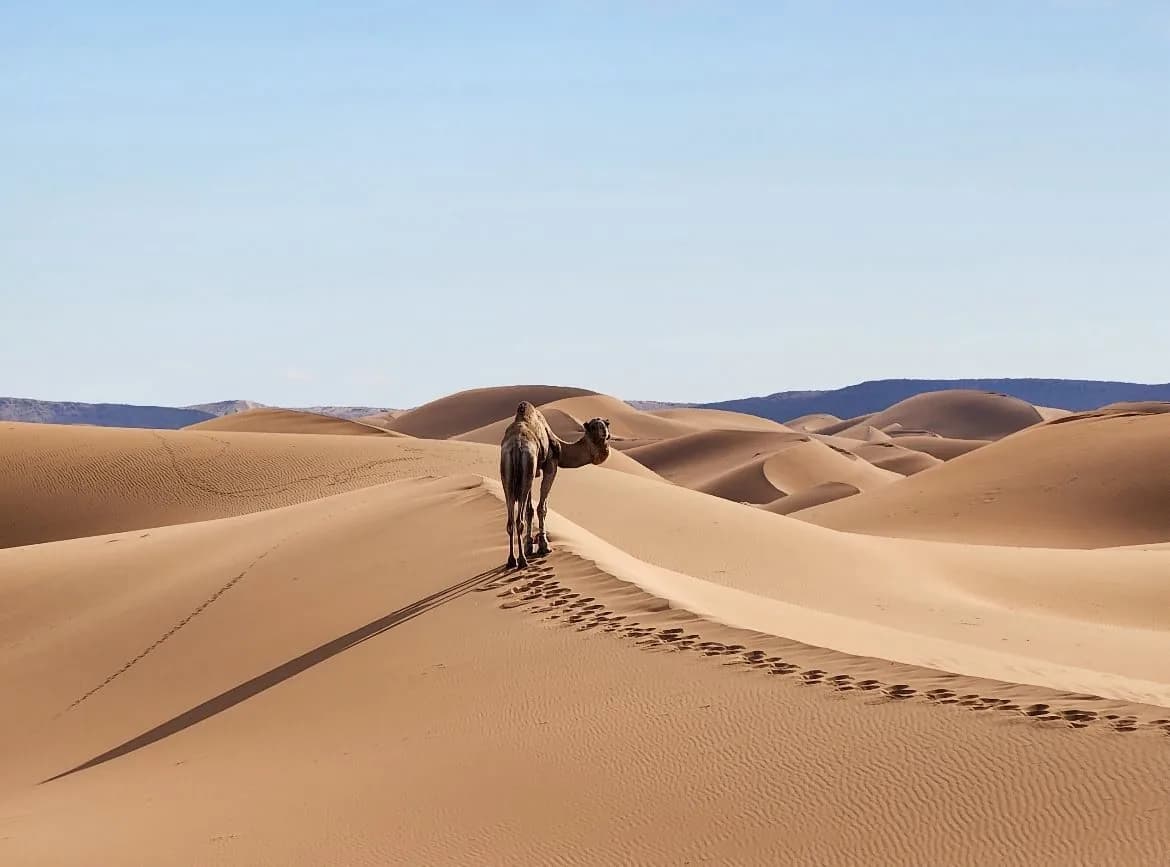
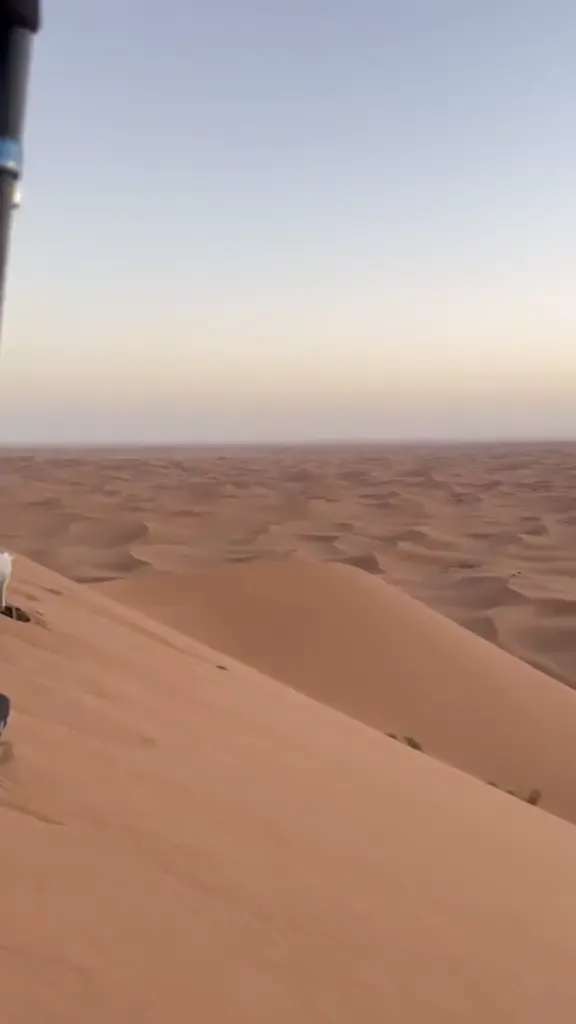
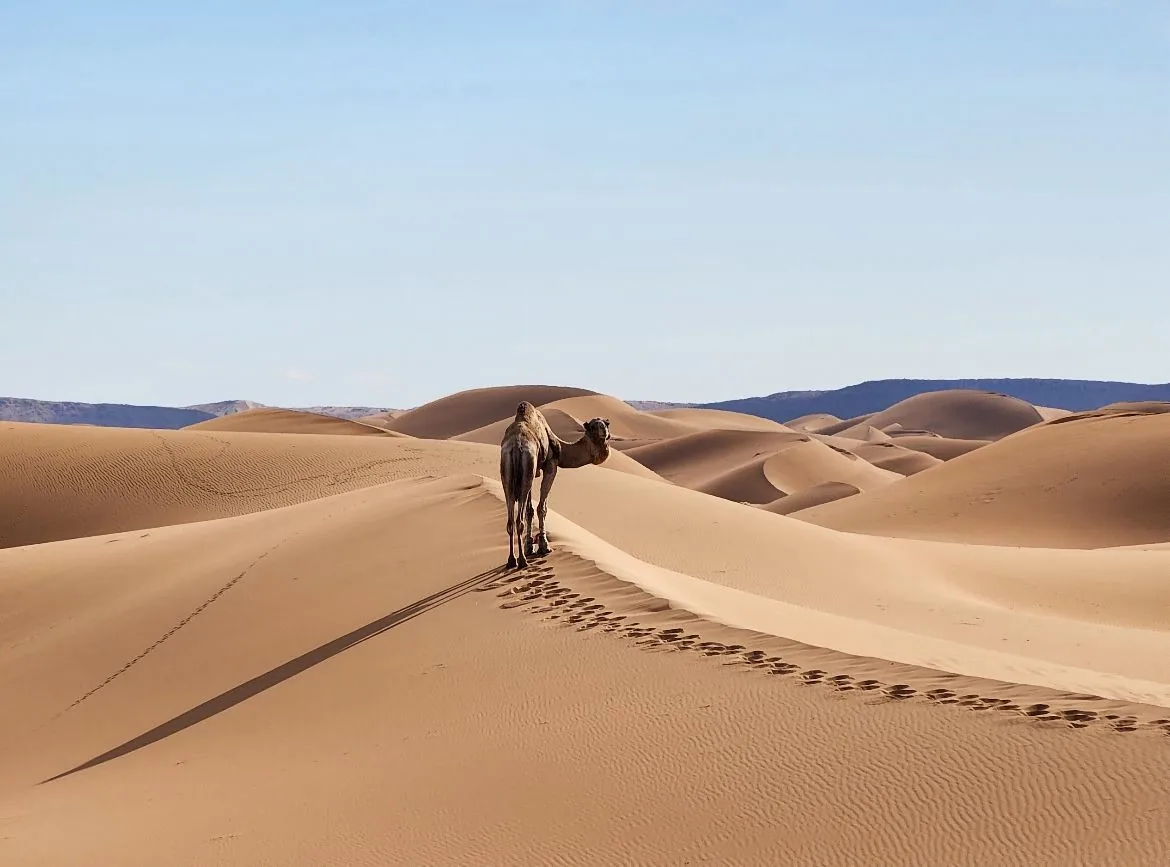 One line of tracks along the crest, and they belong to the camel. Everything the group is not carrying goes this way.
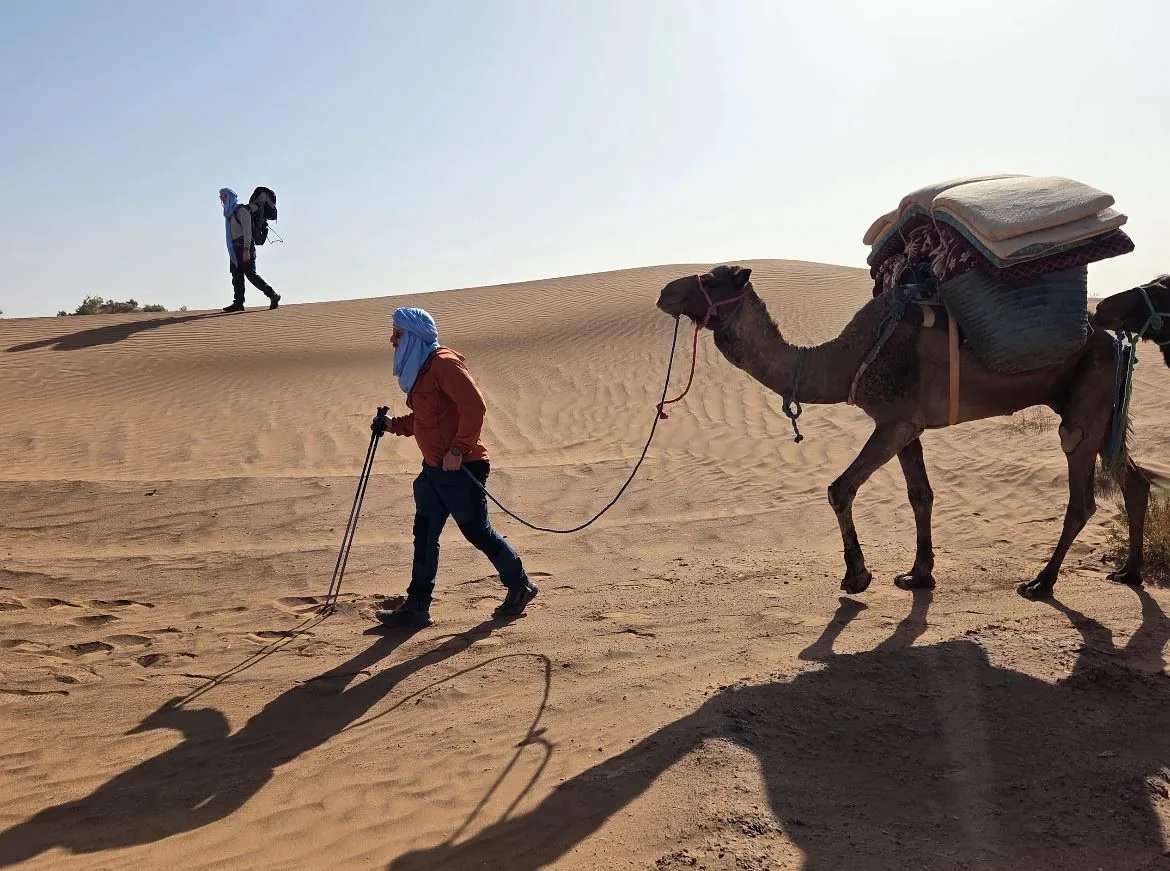 View all 9 photographsBlankets and kit roped onto the camel, a day pack on the person walking. That split is what makes a week on foot possible.
Trip dossier
Route, arrival, kit and operating detail
Geography, arrival, flight handoff and equipment in one place. Final joining times are confirmed in writing for each departure.
01Route & terrain
9 days · Walking with a camel caravan · 6 route points
South from Marrakech through the Draa Valley to the last paved road, then west on foot with a camel caravan into Erg Chigaga and Iriqui. The map shows the region the trip covers rather than a surveyed route: waypoints are indicative, and the day-by-day is not yet confirmed.
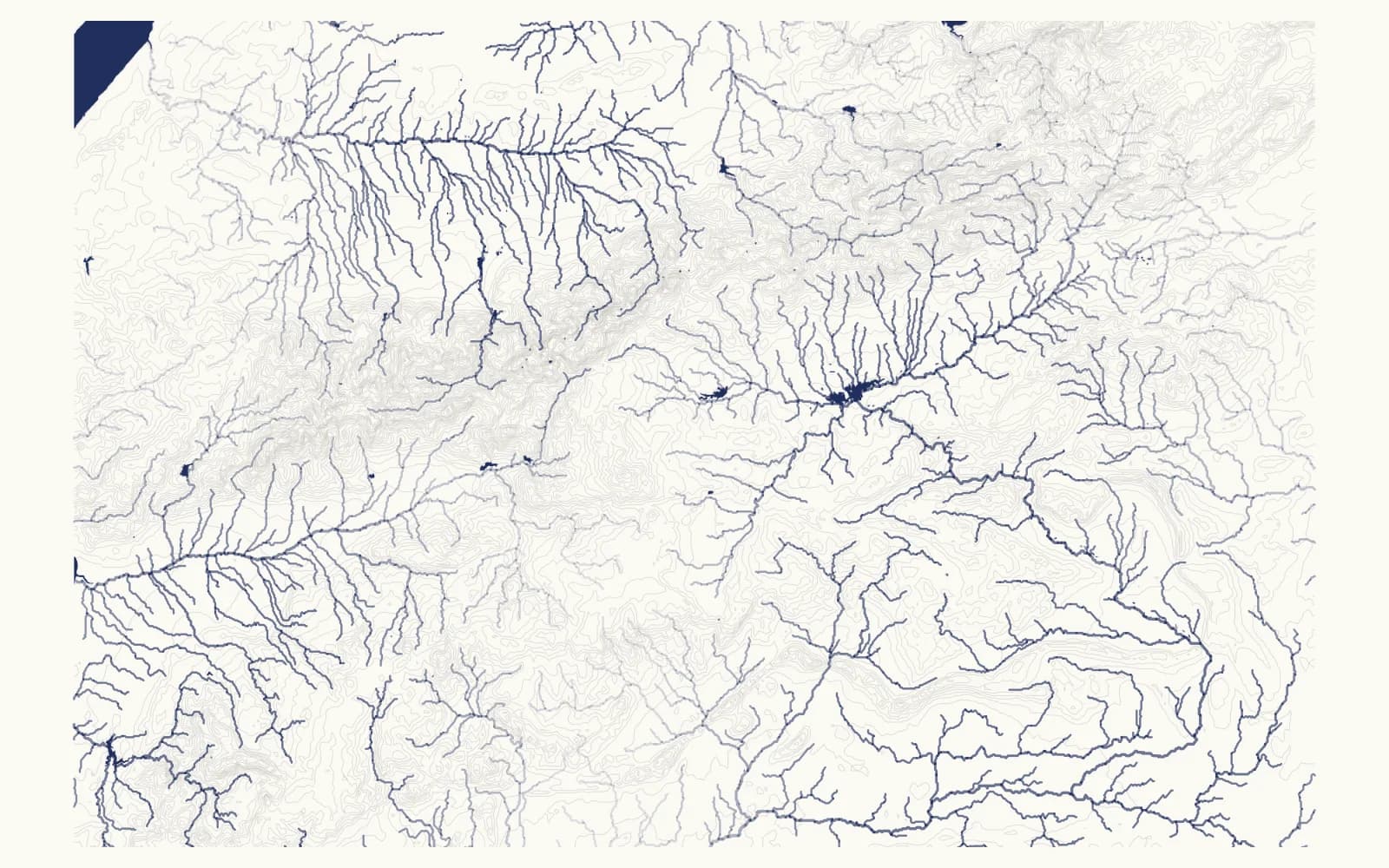
About this map
Blue linework comes from HydroSHEDS/HydroRIVERS, a terrain-derived global drainage network. In deserts, mapped reaches may be intermittent or dry for long periods. The JRC layer shows historical surface-water occurrence, not live water; neither layer maps water below ground. Copernicus supplies relief and Natural Earth supplies land and country boundaries. Context only; not for navigation.
02Risk & conditions
Five dimensions · highest rating 4/5
The conditions that give this trip its character are the same ones that decide who should be on it. Each rating compares this trip with the others on the site; the line beside it says what that means here.
Physical
04 / 05
A week walking in soft sand, most of the day, every day.
Technical
01 / 05
None. The nomad crew handles camels, navigation and camp.
Environment
04 / 05
Desert temperature swing, no shade, no resupply, no road out.
Activity
03 / 05
Walking is the whole trip and it is relentless, even with camels carrying the load.
Geopolitical
02 / 05
Morocco is stable and the route sits well inside the country.
When it goes wrong
On the ground, the trip lead makes the immediate safety call — changing the route, changing the day or stopping the activity. The communications, medical and evacuation arrangements confirmed for this departure will be set out in your written trip information. If a service is not named there, do not assume it is included. Emergency and legal limits →
03Where you sleep
A Marrakech hotel, a M’Hamid guesthouse, supported desert camps and a final kasbah stay.
- Before the trek
- Marrakech hotel and desert guesthouse in M’Hamid.
- During the crossing
- Supported wild camps, with tents on standby when required.
- After the crossing
- Final kasbah stay.
Sharing arrangements and any single option have not yet been confirmed for this trip. Tell us what you need before booking.
04What you eat
All meals during the desert crossing are included.
- Meals
- The camel team carries food and water supplies. Meals outside the desert crossing are not specified in the current inclusion list.
05Arrival & orientation
Marrakech (RAK) · Morocco
Marrakech
Marrakech Menara Airport
Marrakech is the staging city for the desert. The road south through the Draa Valley to the last paved road at M’Hamid takes the better part of a day, so a night here before the drive is normal rather than optional. Trips return to the city to fly out.
- Airport
- RAK
- Country
- Morocco
- Time zone
- Africa/Casablanca
06Flights & joining dates
Marrakech (RAK) · Sat, 20 Mar 2027 – Sun, 28 Mar 2027
Start with flights into Marrakech (RAK).
The search below opens an external site with the recommended travel dates already filled in. Wait for the written arrival deadline before buying a fare you cannot change. Atlas51 does not sell flights or take payment for them.
Sat, 20 Mar 2027 – Sun, 28 Mar 2027
Recommended travel dates · A51-SAN-MAR27
Into and out of Marrakech (RAK)
07Kit & equipment
Confirm the trip-specific kit with us before booking
Ask us to confirm the kit required for your departure, what is provided and any hire costs before you book or buy equipment. The trip inclusions state what is currently included in the price.
08Practical detail
Cancellation, insurance and what's included
- Details & pricing
- Enquire.
- International flights are excluded unless the written offer explicitly includes them.
- Entry & health
- Passport, visa and health requirements are yours to confirm.
- We tell you what we know before you apply. Disclose anything relevant to your safety or the trip's.
- Sleeping arrangements
- Confirmed in your written offer.
- Ask about a single/solo supplement when you apply.
- Insurance
- A condition of travel — cover for medical treatment, emergency evacuation and repatriation.
- We introduce a specialist broker if you'd like one.
- What's covered
- The trip as described on this page — the operator's services, in-trip logistics and issued equipment.
- Excludes flights, personal spending, visas and anything marked excluded in your written offer.
What's included
- Local Guides & Support Team — Experienced Saharan guides and nomadic camel handlers throughout.
- Accommodation — Marrakech hotel stay; desert guesthouse in M'Hamid; fully supported wild camps throughout the Sahara, tents on standby if required; final kasbah stay.
- Transport — All ground transport during the trip.
- Meals — All meals during the desert crossing.
- Camel Support — Camels carry main luggage, camping equipment, food and water supplies, and group equipment, leaving you free to carry only a daypack.
What's not included
- International flights
- Travel insurance
- Personal trekking equipment
- Alcoholic drinks
- Tips and gratuities
- Personal spending money
09Common questions
3 questions answered specifically for this trip, rather than in general.
- Do we walk or ride the camels?
- This is a walking trip. Camels carry the main luggage, camp equipment, food and water supplies; you carry a daypack.
- How fit do I need to be?
- Expect sustained walking in sand for much of each day. The camel team handles the main load, but the walking remains demanding.
- Are all meals included?
- All meals during the desert crossing are included. The current inclusions do not specify every meal outside the crossing.
Run by Jamie
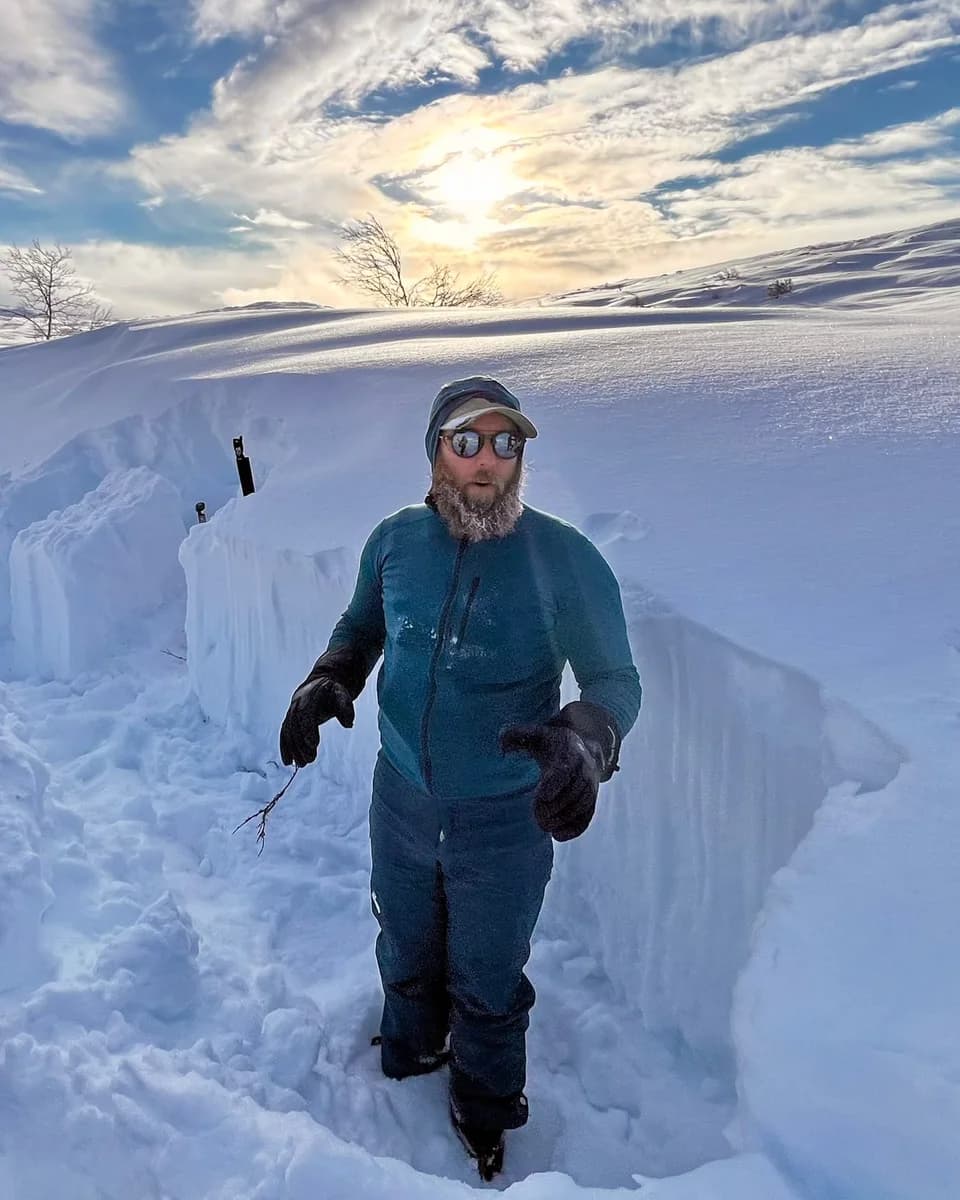
Run by people who know one place well
For more than seventeen years, Jamie has worked in remote mountain and polar environments where practical systems, equipment and judgement have to hold.
How Jamie works →Our approach to responsible travel →01 · Apply
Nothing is booked or charged online.
02 · Tommy replies
Tommy will aim to reply within one business day.
03 · Written offer
The trip, price and next step—in writing.
One date
The departure
Sat, 20 Mar 2027 — Sun, 28 Mar 2027
Applications openPlaces available · small groupApplications close18 Feb 2027
 Member no. 6573. Payments go into a PTS trust account.
Talk the dates or the fit through with Tommy first.
Book a 30-minute chat →Know someone who should see this trip?
Keep a copy of the trip
A brochure for Trekking with Saharan nomads, to read, keep or share.
Keep exploring
Where next
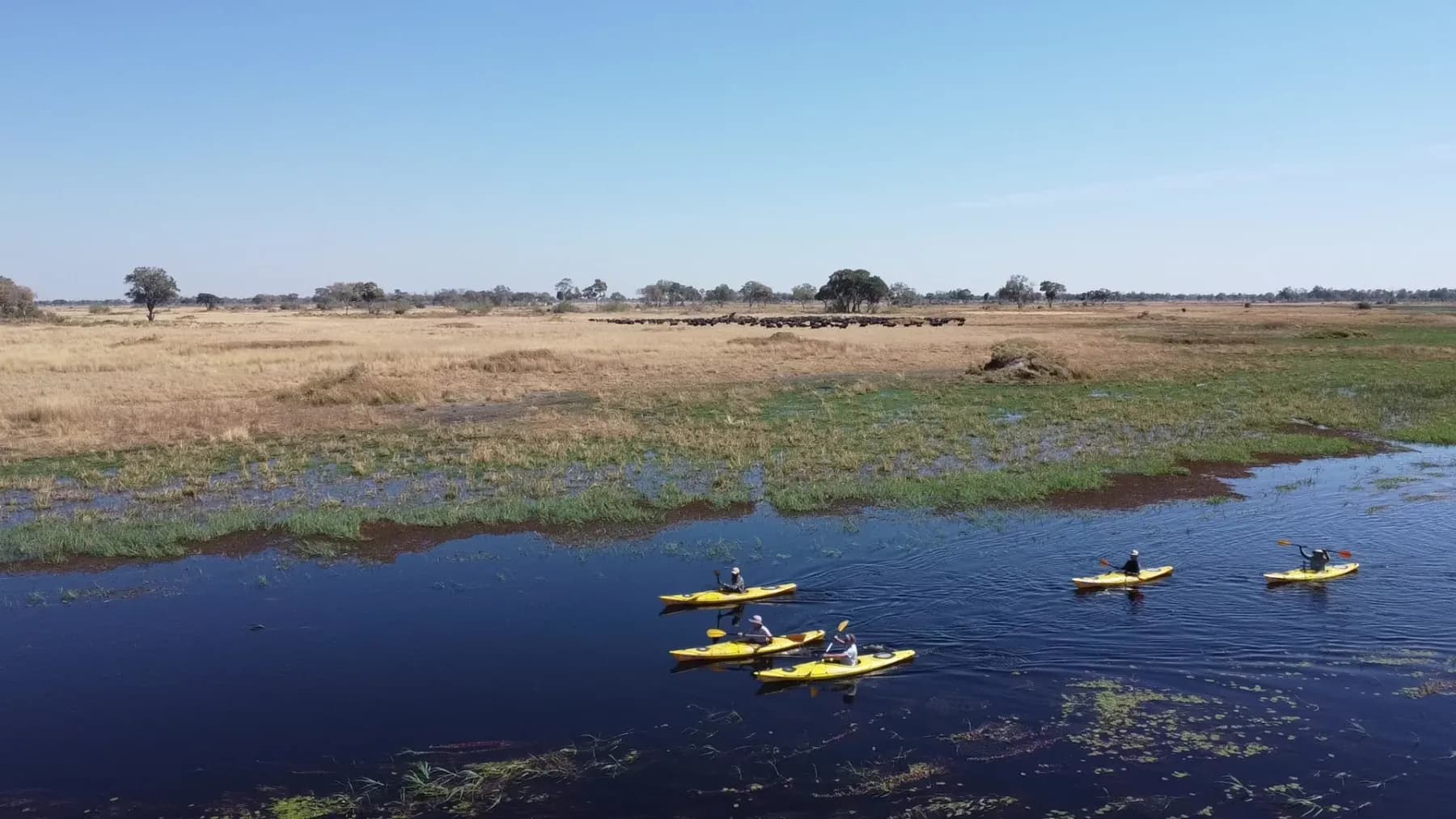 Journey
Okavango Delta, Botswana
Botswana: Kayak the Okavango
Ten days kayaking the Okavango north to south — no roads, no fences, no phone signal.
See the trip →10 days
Enquire
 Journey
Gilgit-Baltistan, Pakistan
Pakistan tuk-tuk frontier
Sixteen days driving a three-wheeler up the Karakoram Highway — supported, and not a race.
See the trip →16 days
Enquire
 Expedition
Pakaraima Mountains, Guyana
Guyana: Sky People
Fourteen days on foot into Guyana's Pakaraima Mountains, towards a summit nobody can promise.
See the trip →14 days
Enquire