
Norway: The Femundsmarka
Nine days hauling a pulk across frozen Femundsmarka, learning what polar expeditions run on.


- Duration
- 9 days
- Group size
- 7–10 travellers
- Operating window
- 20–28 February 2027
- The departure
- Sat, 20 Feb 2027
- Gateway
- Oslo (OSL)
- Remoteness
- Deep
- Self-reliance
- Shared
- Comfort
- Wild
- Environment
- Arctic
How to read these
These terms compare trips across Atlas51. Environment describes terrain, not difficulty.
Remoteness
Edge
Established support remains relatively close.
Deep
Help or an exit may take time.
Extreme
Help and an exit may be days away.
Self-reliance
Supported
The crew runs the core systems.
Shared
You take on part of the work.
Self-reliant
Your skills and decisions are central.
Comfort
Basic
A roof every night.
Wild
Camped, with camp made for you.
Spartan
You build your own shelter.
Environment
Desert
Sand, rock and arid ground.
Arctic
Snow, ice and sustained cold.
Jungle
Dense, humid forest.
Mountain
Steep, high or broken ground.
Inland water
Rivers, lakes and wetlands.
Ocean
Open-coast or offshore water.
Forest
Woodland and trail terrain.
Steppe
Open grassland with few trees.
Savanna
Warm grassland with scattered trees.
Reef
Shallow coastal water and coral ground.
Mixed
Several distinct terrains in one trip.
A good fit if
You want the undertaking, not just the backdrop
- 01
Want serious disconnection.
- 02
Want to learn genuine expedition skills rather than simply visit wild places.
- 03
Enjoy being challenged physically and mentally.
- 04
Want to understand how real expeditions actually work.
- 05
Get excited by the idea of pulling a pulk across frozen wilderness.
- 06
Want to camp in serious Arctic conditions.
- 07
Believe the best adventures genuinely teach you something.
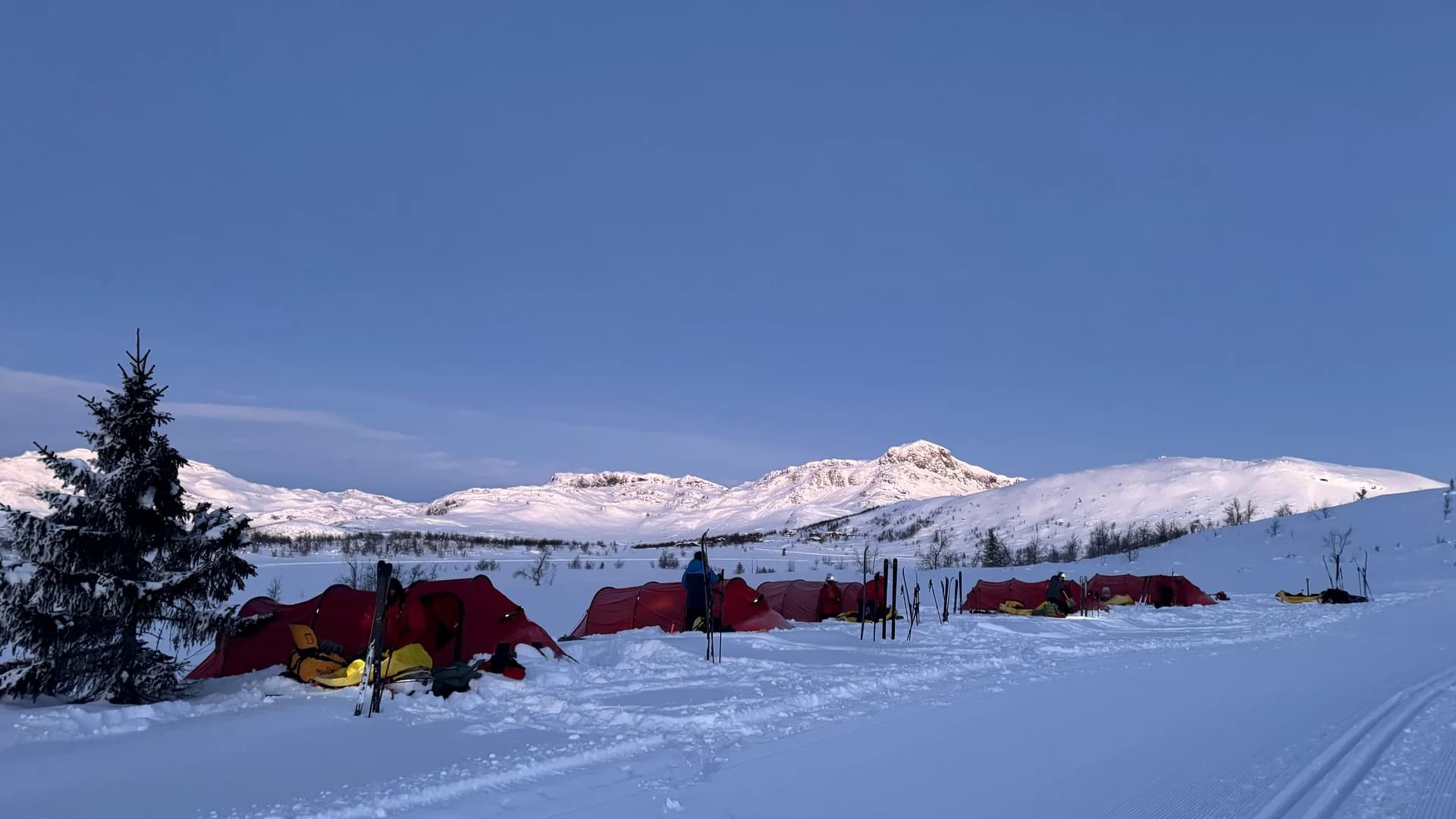
The trip
What you’ll learn and how it’s taught
Course
Skills-led travel, taught to a stated level.
There are no prepared pistes, no signs telling you where to go and no easy escape routes.
Ski and pulk through frozen lakes and pine forest on the Swedish border, living the systems rather than being shown them.
Because it's truly one of the planet's last wild winter frontiers. Because every Arctic expedition has to start somewhere with a heap of snow. Because it's an amazing place to learn real survival skills in a serious Arctic environment.
Deep in the forests, frozen lakes and wilderness of Femundsmarka National Park lies one of Scandinavia's last great winter frontiers. There are no prepared pistes, no signs telling you where to go and no easy escape routes. Just snow, silence and the skills that matter.
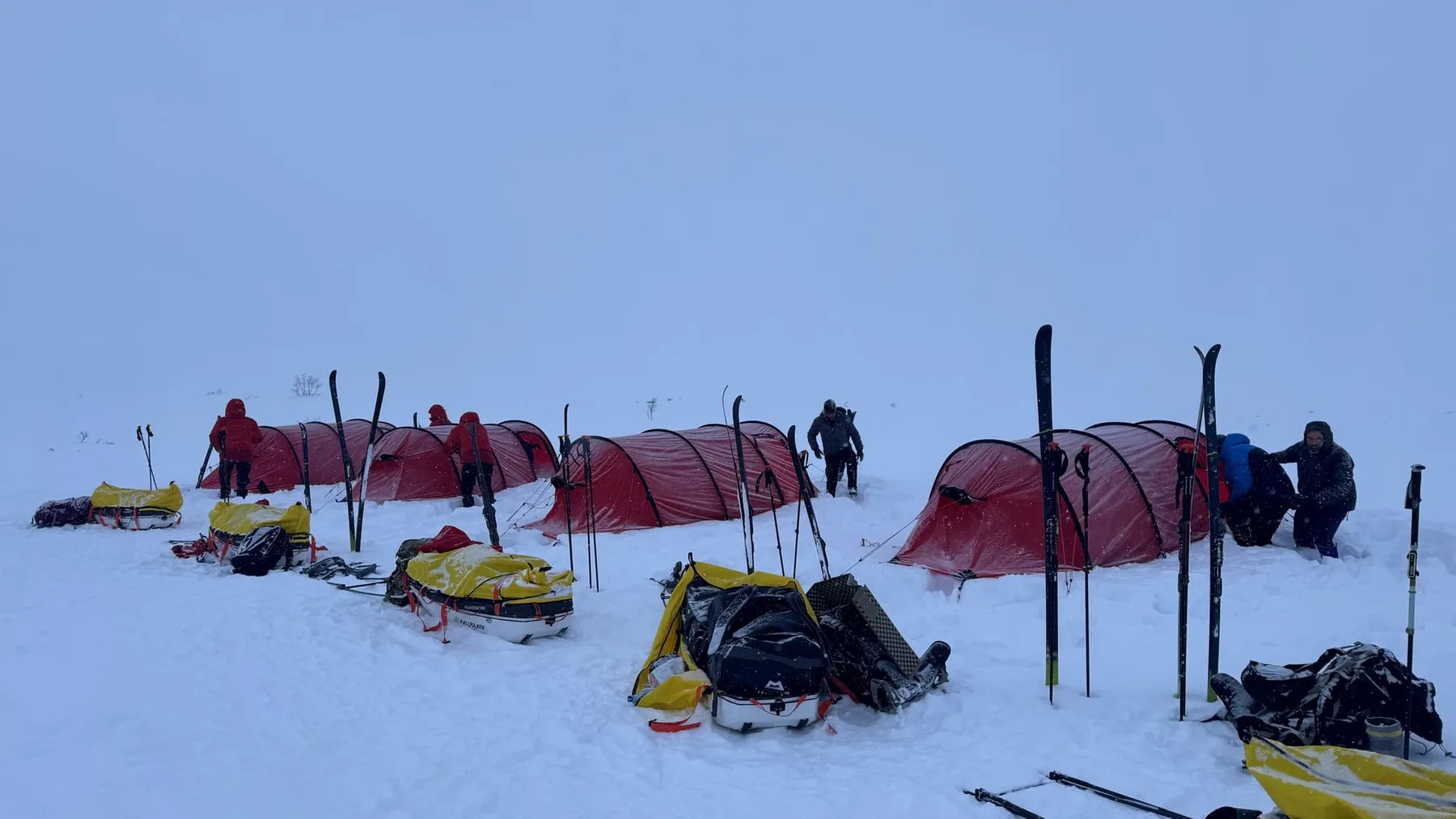
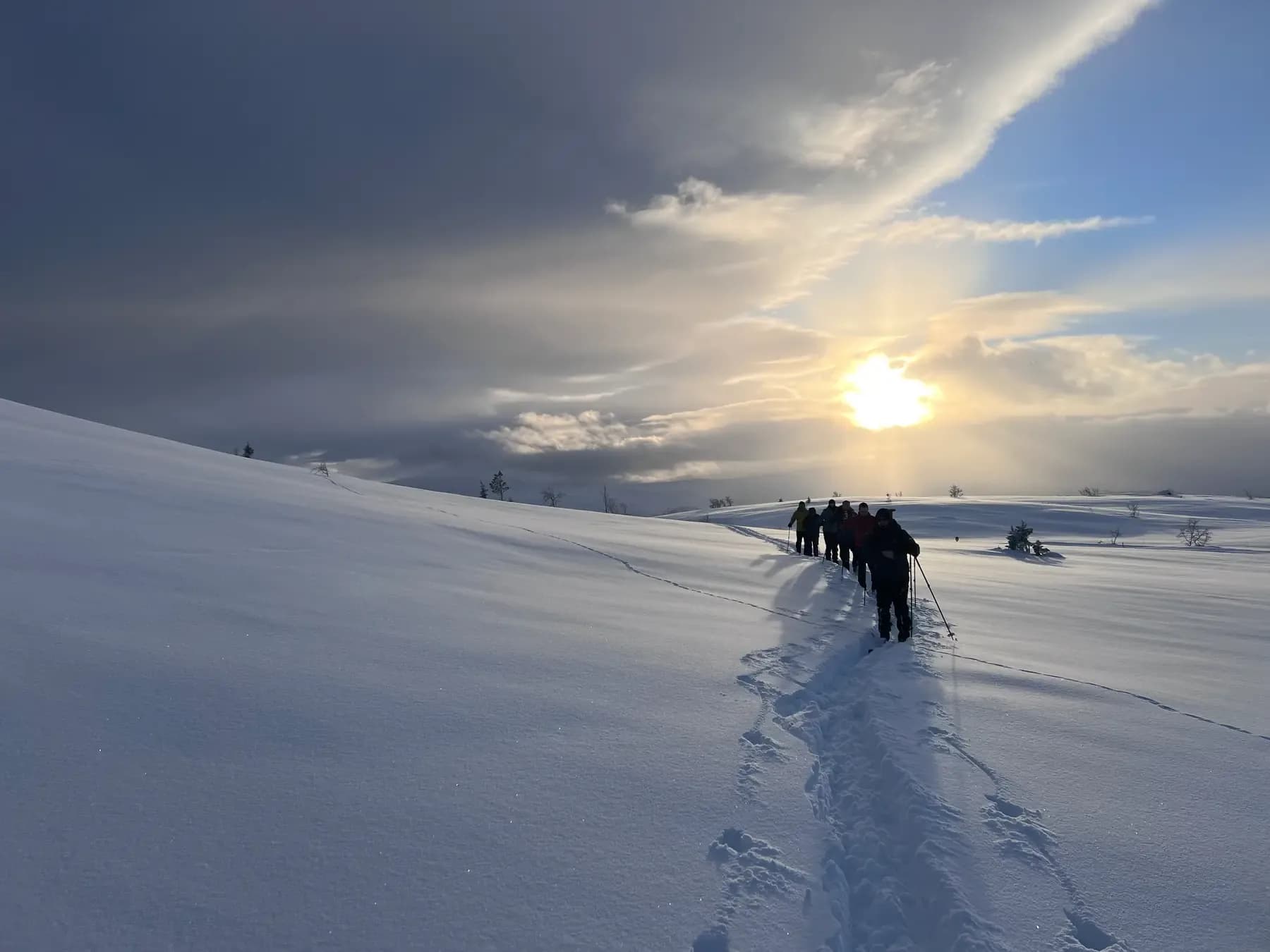
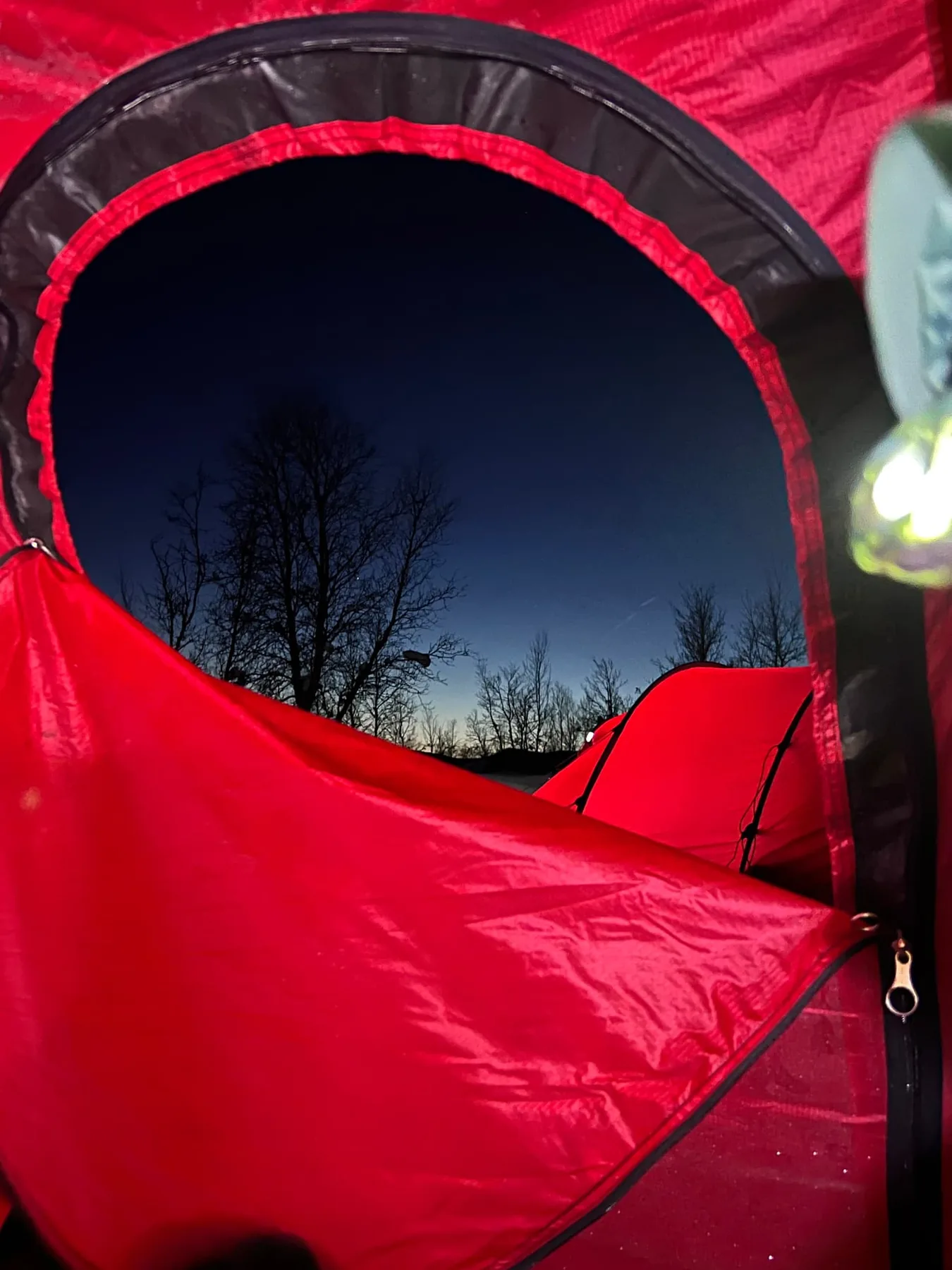
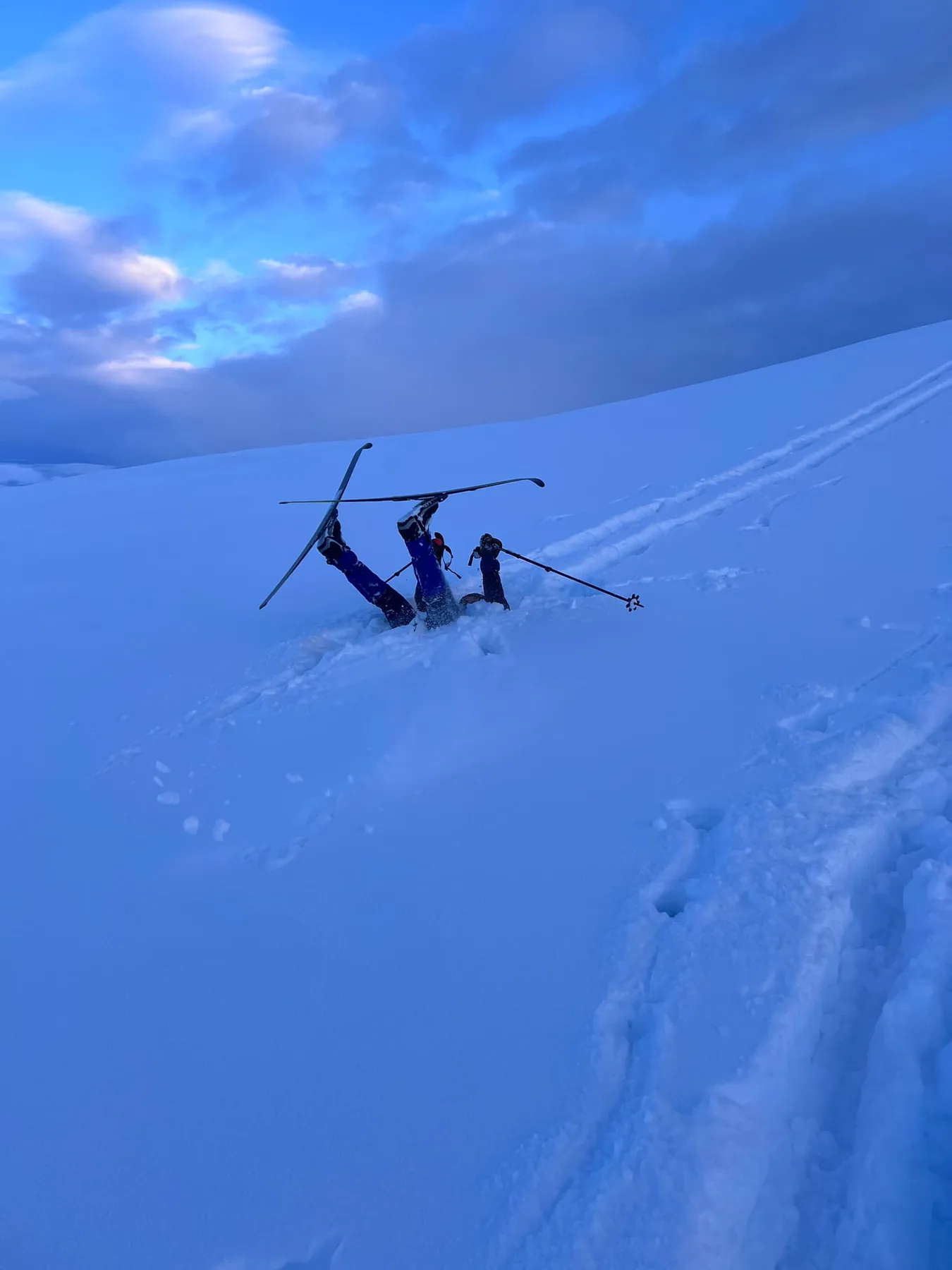
Femundsmarka is steeped in Scandinavian folklore, like the tales of the Huldra, seductive forest spirits. Moose, wild reindeer, oxen, bears, wolves, lynx and wolverines also roam the park in the summer months.
This is a challenging winter expedition. Expect long days skiing through snow while pulling a loaded pulk. Expect cold mornings. Expect to spend your evenings building camp rather than checking into hotels. There are no warm lodges waiting at the end of each day. No shortcuts. No prepared trails.
A typical day
The shape of the days
A winter expedition rhythm shaped by snow, ice and the steady pull of the pulk.
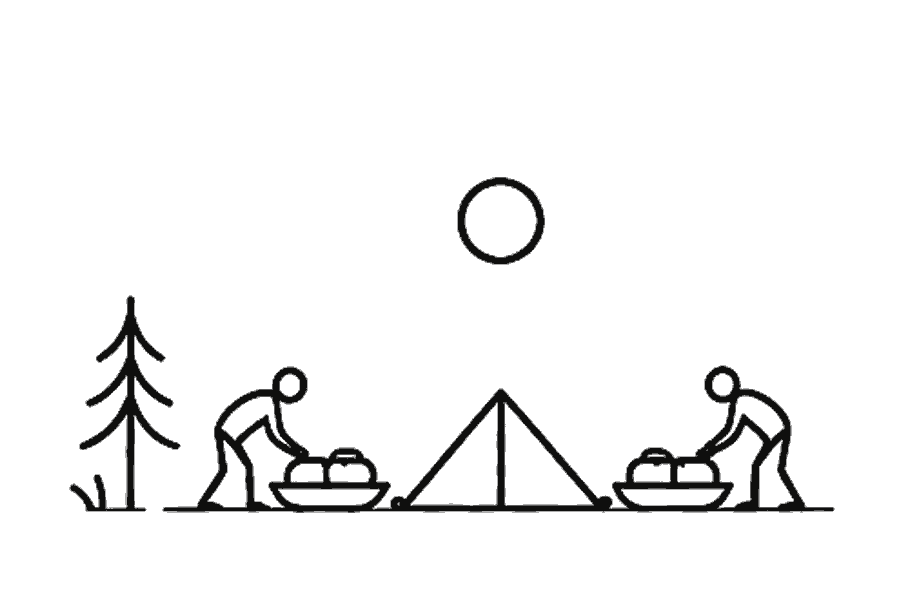
Break camp in the cold
Wake early in the tents, light the stoves and get breakfast and hot water underway. Sleeping systems and tents are packed, equipment is shared between the pulks and the group gathers for a briefing on the terrain, conditions and skills ahead.
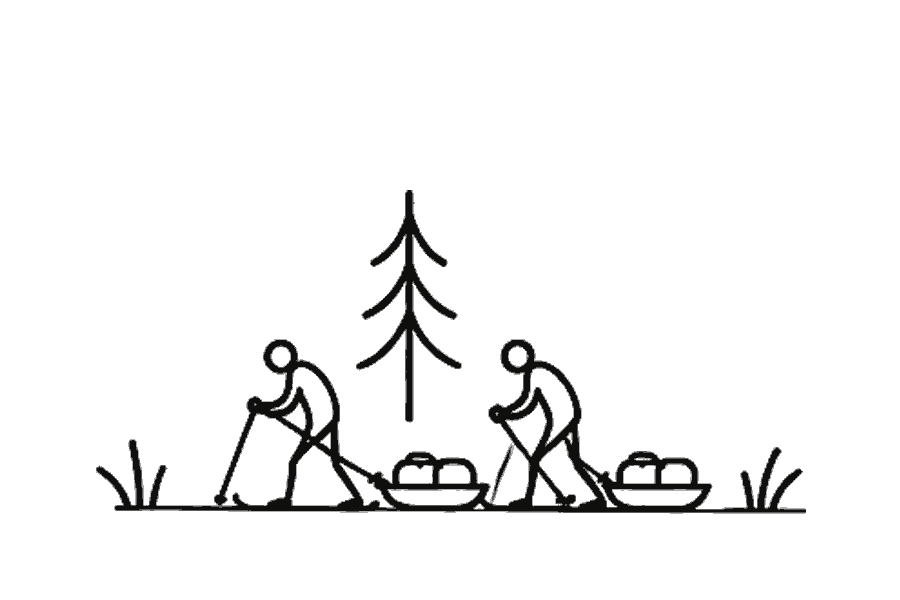
Travel at expedition pace
Ski steadily through snow-covered forest, open ground and frozen lake systems, stopping to adjust layers, eat and assess the route. Along the way, practise efficient movement, load hauling, lake crossings, ice assessment and emergency systems.

Build a winter camp
Choose a safe place to stop while there is still light. Pitch the tents, secure the snow anchors and organise the stove and cooking systems together, then change into warm layers, make dinner and review the day with the expedition leaders.

Settle into the silence
Prepare equipment for the morning and listen for the quiet signs of life beyond camp. Once the stoves are safely shut down and everything is secured, climb into the sleeping bag for a proper expedition sleep before another day on skis.
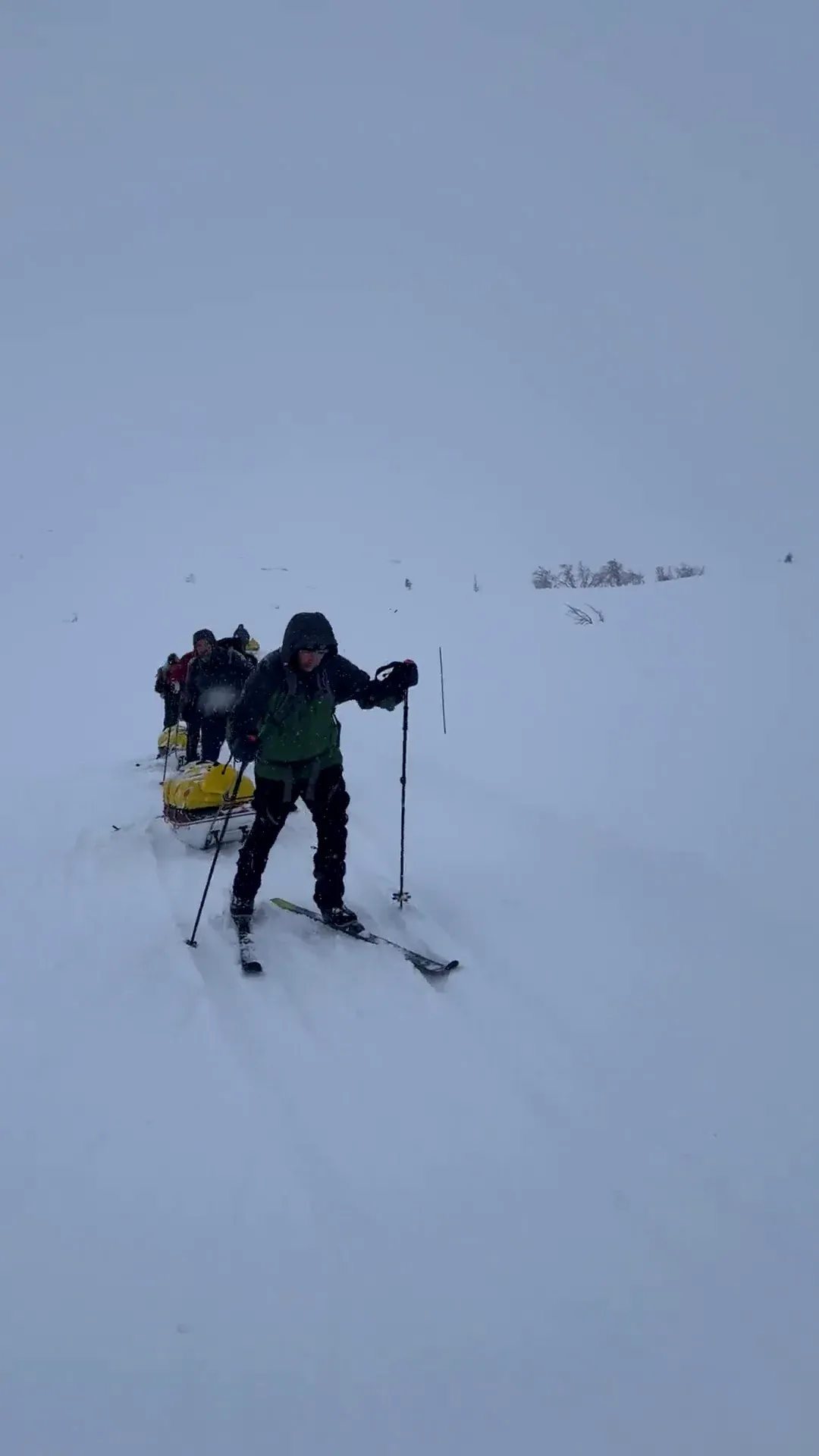
From the field
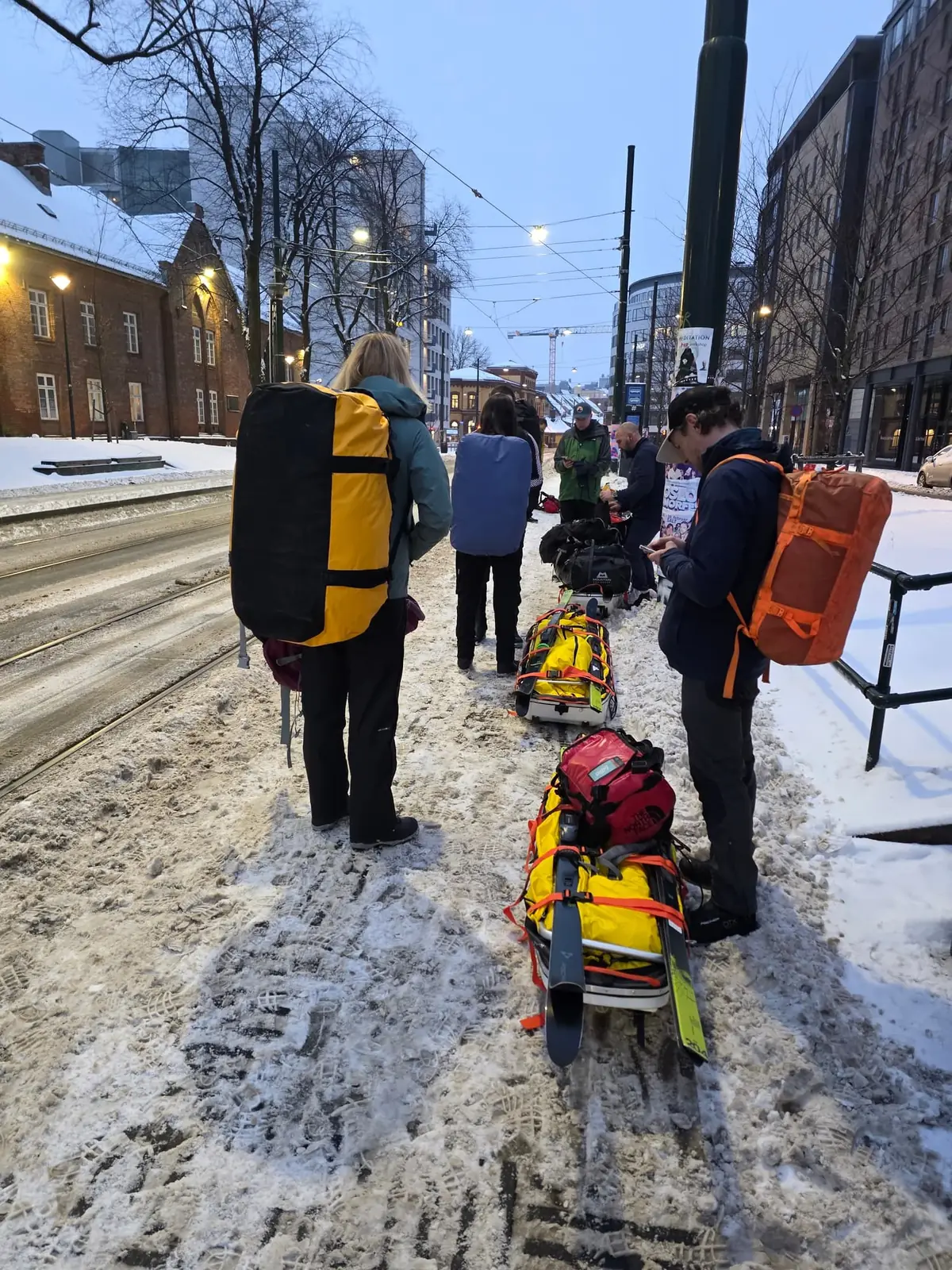 Loaded pulks on a city pavement. The expedition starts before the snow does.
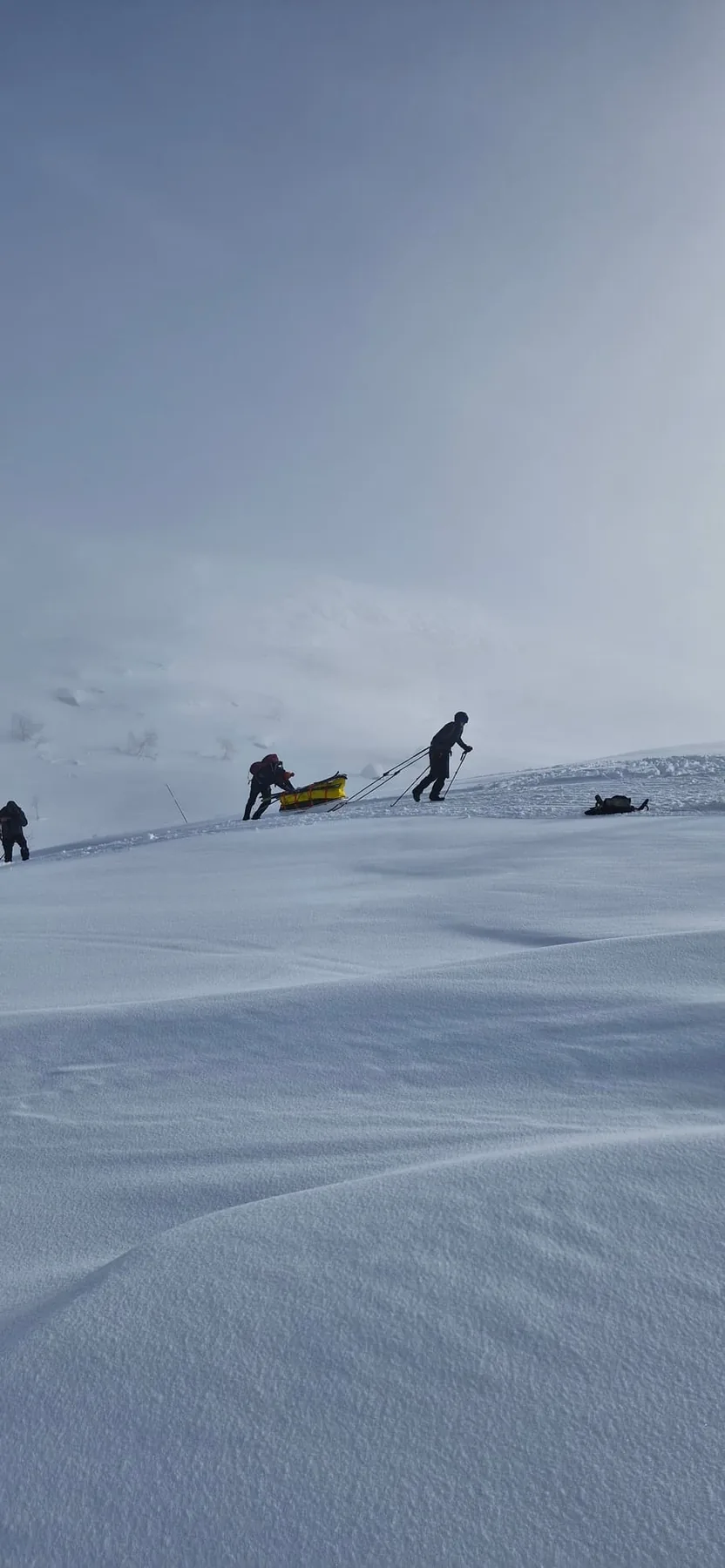 A yellow pulk and two people on a slope with nothing else on it. You haul your own load the whole way.
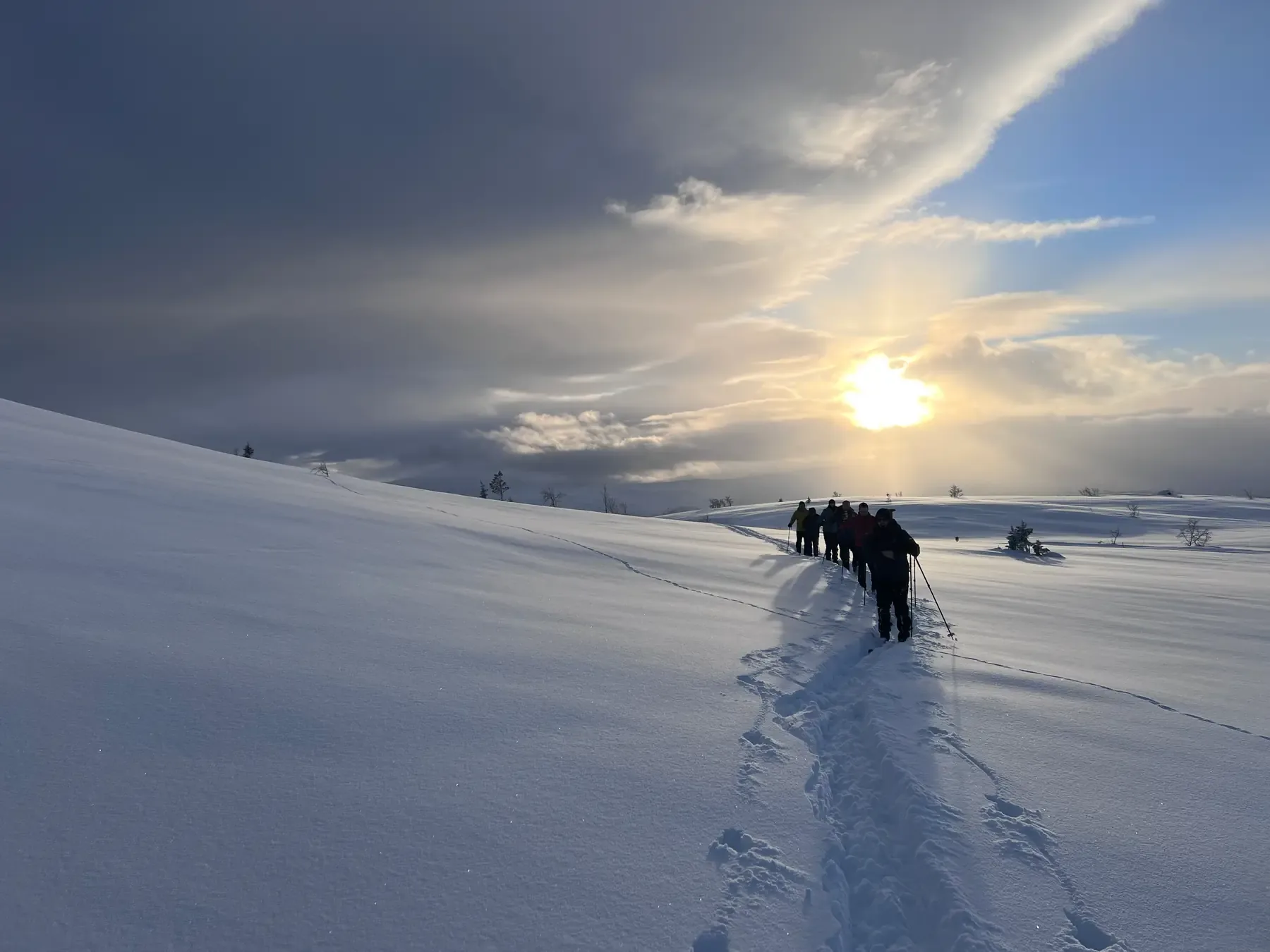 One track crosses the snow ahead of the group. The course travels on skis with equipment carried in pulks.
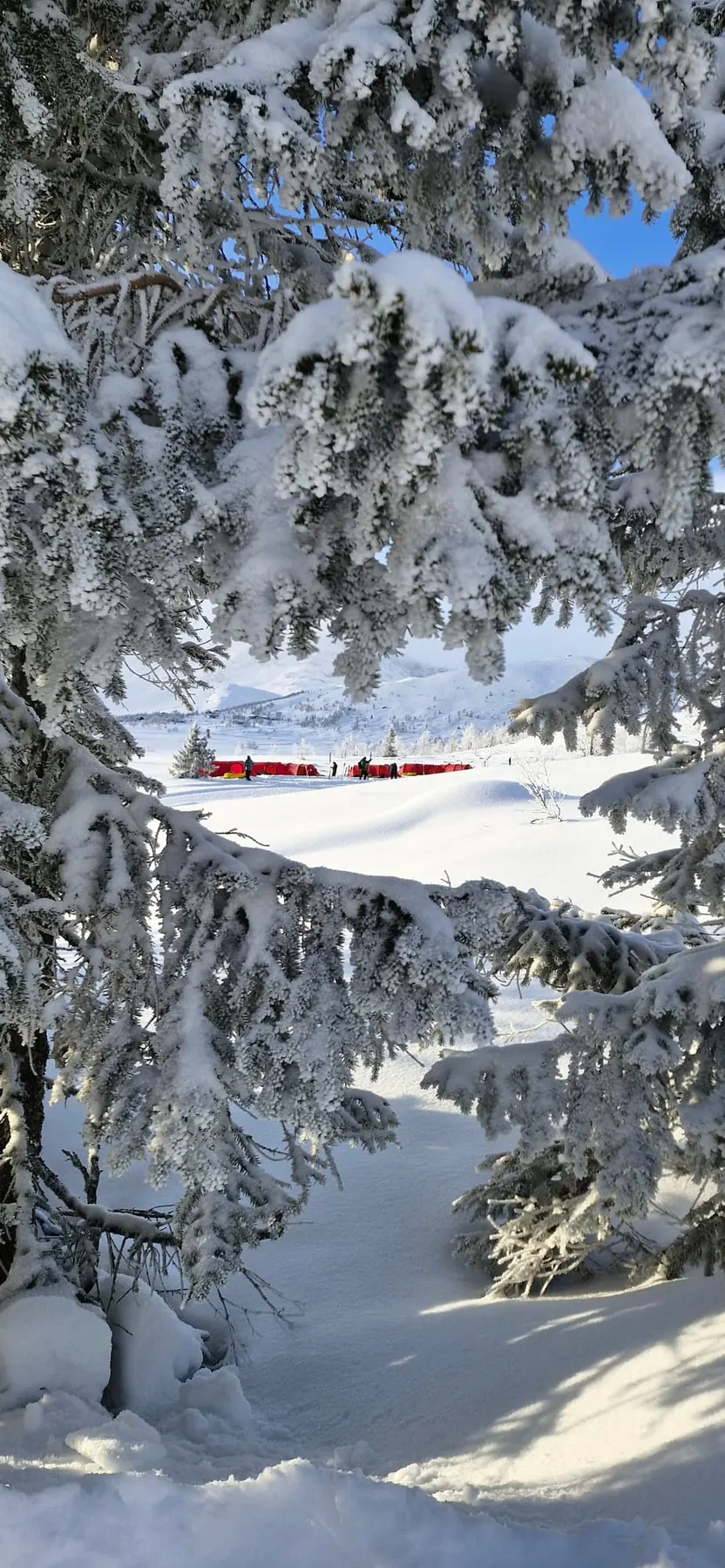 The camp, seen through the trees you passed on the way in. There is no lodge at the end of the day, only what the group pitches.
 View all 16 photographsTwo glasses that need both hands, in Oslo. The trip begins and ends in the city, and the wilderness sits in between.
Trip dossier
Route, arrival, kit and operating detail
Geography, arrival, flight handoff and equipment in one place. Final joining times are confirmed in writing for each departure.
01Route & terrain
9 days · Ski touring + winter survival training · 4 route points
North-east from Oslo to the Swedish border, then on skis and pulks through Femundsmarka's frozen lakes and pine forest. The map shows the region the trip covers rather than a surveyed route: waypoints are indicative, and the day-by-day is not yet confirmed.
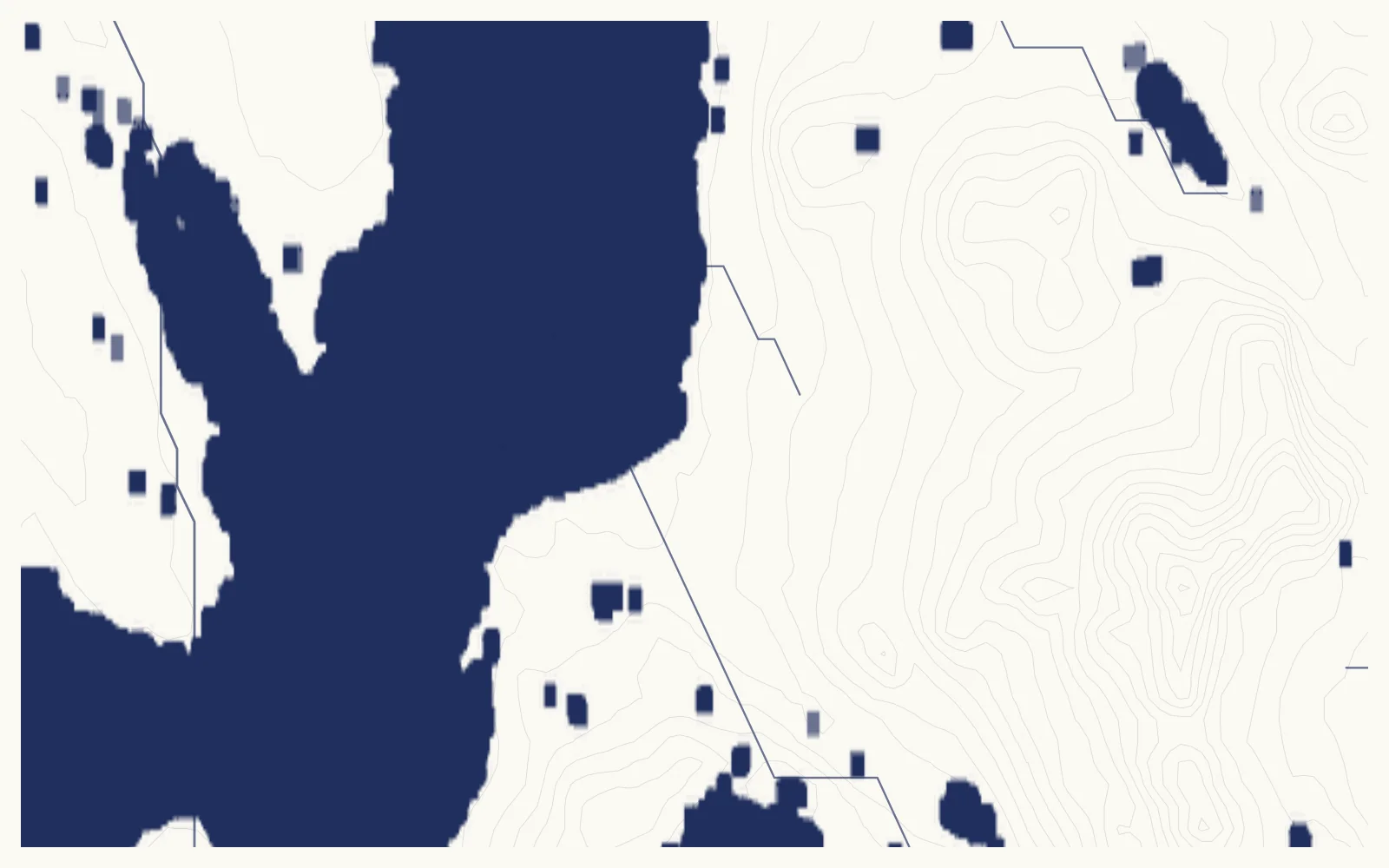
About this map
Rivers use HydroSHEDS/HydroRIVERS; the European Commission’s Joint Research Centre (JRC) provides observed water extent, Copernicus relief, and Natural Earth land and country boundaries. These layers provide geographic context, not navigation.
02Risk & conditions
Five dimensions · highest rating 4/5
The conditions that give this trip its character are the same ones that decide who should be on it. Each rating compares this trip with the others on the site; the line beside it says what that means here.
Physical
04 / 05
Long days on skis hauling a loaded pulk, in snow, carrying your own camp.
Technical
03 / 05
Telemark skiing, stove management and snow shelters — taught on the trip, not assumed.
Environment
04 / 05
Sub-zero throughout, no huts, no easy exit.
Activity
03 / 05
Frozen-lake travel and avalanche terrain, mitigated by instruction.
Geopolitical
01 / 05
Norway. No advisory of any kind.
When it goes wrong
On the ground, the trip lead makes the immediate safety call — changing the route, changing the day or stopping the activity. The communications, medical and evacuation arrangements confirmed for this departure will be set out in your written trip information. If a service is not named there, do not assume it is included. Emergency and legal limits →
03Where you sleep
Winter tents and wilderness camps during the course; no lodge at the end of a ski day.
- On the course
- Winter tents, snow camps and remote wilderness campsites.
Sharing arrangements and any single option have not yet been confirmed for this trip. Tell us what you need before booking.
04What you eat
Expedition food is provided during the course.
- Meals
- The group works with stove and cooking systems as part of winter campcraft.
05Arrival & orientation
Oslo (OSL) · Norway
Oslo
Oslo Airport Gardermoen
Oslo is the international gateway rather than the trip start. The wilderness is a long onward journey north-east by road or rail, so allow for the connection given in the joining instructions and avoid a tight same-day booking.
- Airport
- OSL
- Country
- Norway
- Time zone
- Europe/Oslo
06Flights & joining dates
Oslo (OSL) · Sat, 20 Feb 2027 – Sun, 28 Feb 2027
Start with flights into Oslo (OSL).
The search below opens an external site with the recommended travel dates already filled in. Wait for the written arrival deadline before buying a fare you cannot change. Atlas51 does not sell flights or take payment for them.
Sat, 20 Feb 2027 – Sun, 28 Feb 2027
Recommended travel dates · A51-FEM-FEB27
Into and out of Oslo (OSL)
07Kit & equipment
Confirm the trip-specific kit with us before booking
Ask us to confirm the kit required for your departure, what is provided and any hire costs before you book or buy equipment. The trip inclusions state what is currently included in the price.
08Practical detail
Cancellation, insurance and what's included
- Details & pricing
- Enquire.
- International flights are excluded unless the written offer explicitly includes them.
- Entry & health
- Passport, visa and health requirements are yours to confirm.
- We tell you what we know before you apply. Disclose anything relevant to your safety or the trip's.
- Sleeping arrangements
- Confirmed in your written offer.
- Ask about a single/solo supplement when you apply.
- Insurance
- A condition of travel — cover for medical treatment, emergency evacuation and repatriation.
- We introduce a specialist broker if you'd like one.
- What's covered
- The trip as described on this page — the operator's services, in-trip logistics and issued equipment.
- Excludes flights, personal spending, visas and anything marked excluded in your written offer.
What's included
- Training & Support — Experienced expedition leaders and winter wilderness instructors throughout, guiding every aspect of expedition life from ski technique and campcraft through to avalanche awareness and polar systems. Expedition food provided.
- Expedition Training — Expedition skiing instruction; pulk management tuition; winter camping training; avalanche awareness and rescue techniques; ice travel and safety instruction; emergency shelter construction; expedition decision-making and planning skills.
- Accommodation — Winter tents; snow camps; remote wilderness campsites. This is training for polar travel, not a hotel-based adventure.
- Transport — Return transport from Oslo to the expedition start point; all internal expedition logistics.
What's not included
- International travel to Norway
- Travel insurance
- Personal equipment unless specifically stated
- Alcoholic drinks
- Personal spending money
- Any costs arising from changes to personal travel plans
- Arctic sleeping bag, coat, boots etc. are available for rent and may be required if personal sleeping bags are not safe for Arctic conditions
09Common questions
3 questions answered specifically for this trip, rather than in general.
- Is this a ski holiday or a course?
- It is a winter skills course. You practise ski and pulk travel, winter camping, stove systems, ice travel, emergency shelters and expedition decision-making.
- What if I've never done this before?
- Ski technique, stove management and winter campcraft are taught on the course. You still need to be ready for long days hauling a loaded pulk in cold conditions; discuss your existing experience and fitness before applying.
- Do we stay in lodges at the end of each ski day?
- No. The course uses winter tents, snow camps and wilderness campsites, and the group works together to build camp.
Run by Jamie
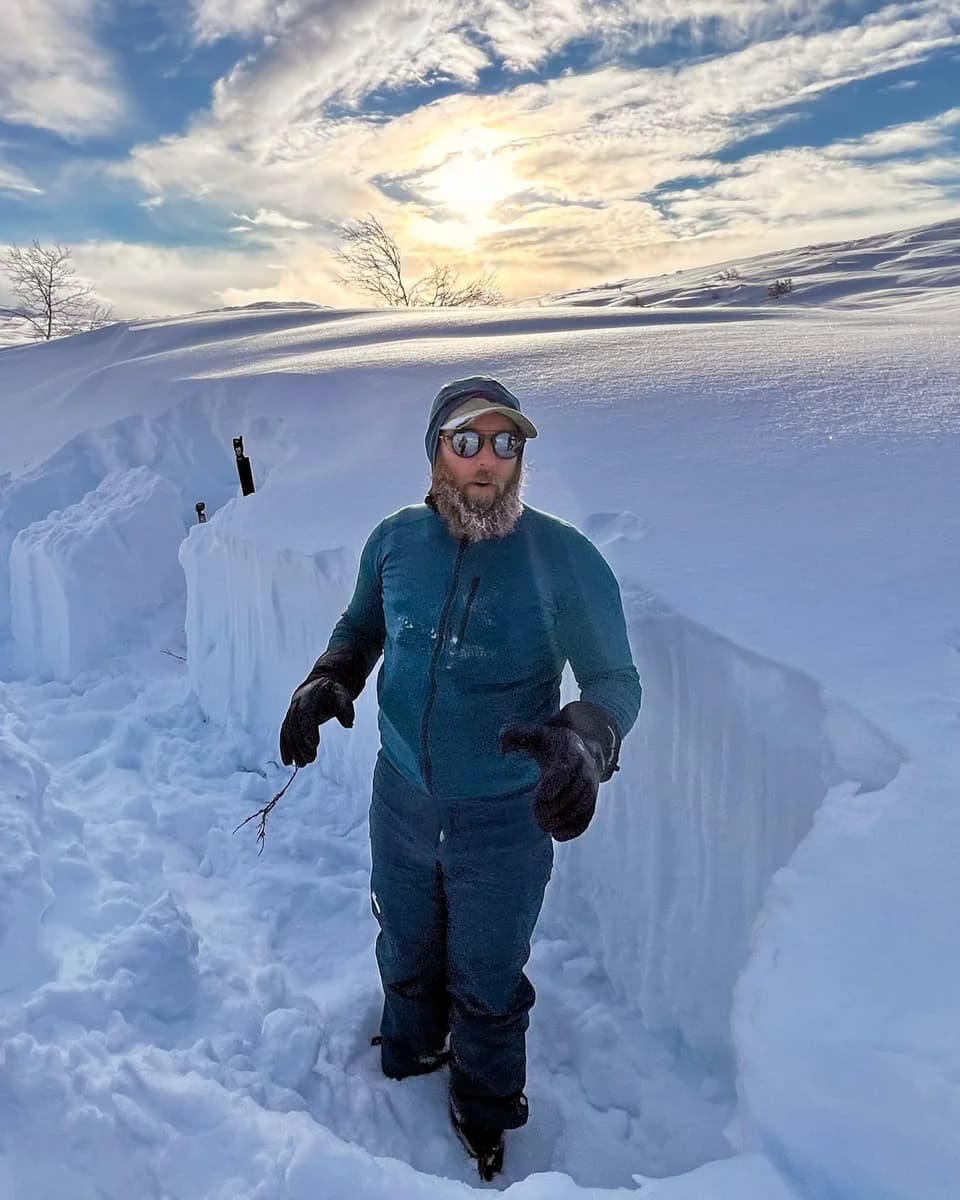
Run by people who know one place well
For more than seventeen years, Jamie has worked in remote mountain and polar environments where practical systems, equipment and judgement have to hold.
How Jamie works →Our approach to responsible travel →01 · Apply
Nothing is booked or charged online.
02 · Tommy replies
Tommy will aim to reply within one business day.
03 · Written offer
The trip, price and next step—in writing.
One date
The departure
Sat, 20 Feb 2027 — Sun, 28 Feb 2027
Applications openPlaces available · small groupApplications close21 Jan 2027
 Member no. 6573. Payments go into a PTS trust account.
Talk the dates or the fit through with Tommy first.
Book a 30-minute chat →Know someone who should see this trip?
Keep a copy of the trip
A brochure for Norway: The Femundsmarka, to read, keep or share.
Keep exploring
Where next
 Journey
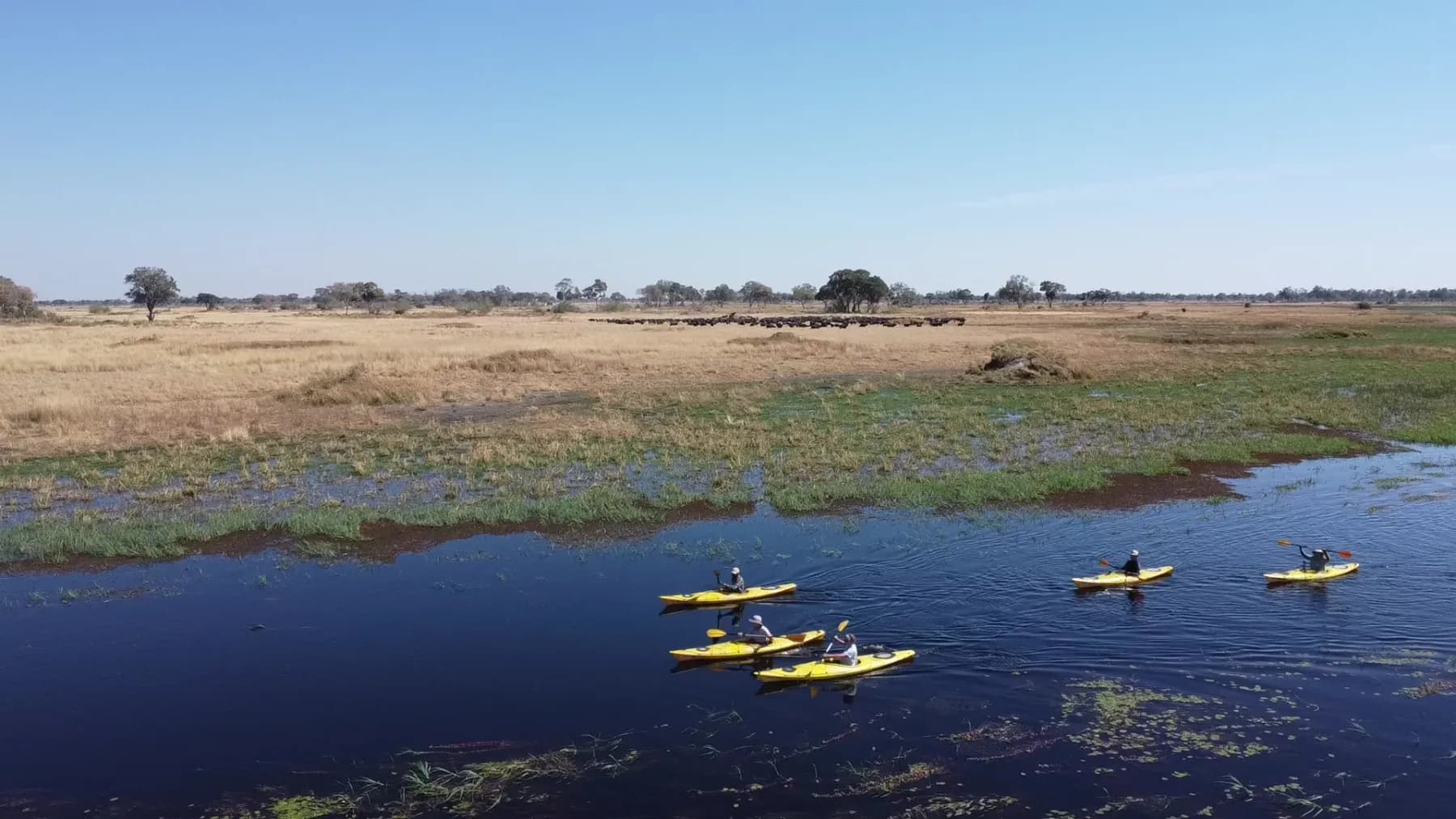
Okavango Delta, Botswana
Botswana: Kayak the Okavango
Ten days kayaking the Okavango north to south — no roads, no fences, no phone signal.
See the trip →10 days
Enquire
 Expedition
Pakaraima Mountains, Guyana
Guyana: Sky People
Fourteen days on foot into Guyana's Pakaraima Mountains, towards a summit nobody can promise.
See the trip →14 days
Enquire
 Journey
Gilgit-Baltistan, Pakistan
Pakistan tuk-tuk frontier
Sixteen days driving a three-wheeler up the Karakoram Highway — supported, and not a race.
See the trip →16 days
Enquire