Journal · 2026-08-27 · 7 min
Two weeks in the Okavango Delta
A cargo boat hits a hippo, eight strangers become a kayak crew, and the roads disappear for two weeks in Botswana.
This is a personal account of an earlier two-week journey. The current Atlas51 trip has its own duration, dates and inclusions, set out on the linked trip page.
The current Okavango trip: Botswana: Kayak The Okavango

This is one of those trips that's very difficult to explain without accidentally launching into a novella.
It started simply enough. We flew to Maun, Botswana, got on a bus with eight strangers, jumped onto a motorboat, climbed into a kayak and then disappeared from civilisation for two weeks.
The plan sounded straightforward when it was explained to us: paddle through the Okavango Delta from top to bottom, camp on remote islands, see an outrageous amount of wildlife and, at some point, abandon most modern comforts and use whatever muscle strength remained buried beneath years of office work.
The Delta, however, had other ideas.
Day one: a bad start
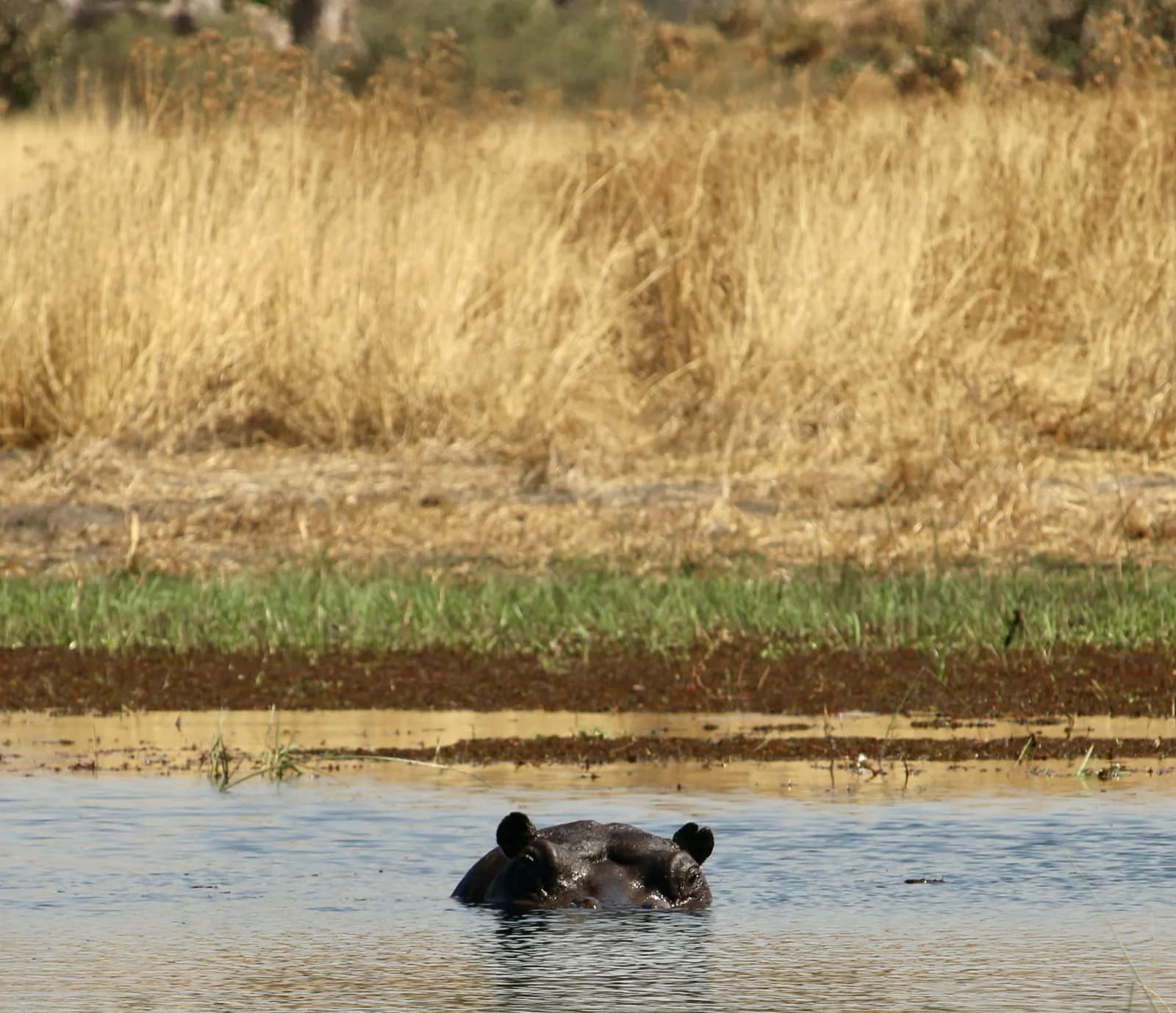
On day one, our cargo boat hit a hippo, and he was pissed off before we hit him.
We imagined the hippo came off worse, but that would be giving the boat far too much credit. The hippo was completely fine — albeit more pissed off than in the first place — but otherwise unaffected.
The boat looked like it had just discovered what happens when several tonnes of muscle, teeth and bad attitude decide not to move out of the way. Like a stamped-on Coke can.
After a brief period of standing around looking at each other and silently wondering whether this was an omen, we repacked everything, shuffled equipment between boats and kayaks, and soldiered on.
Because if a hippo gently T-bones your expedition within the first few hours and we turn around and go home, that's not really a travel story. That's just poor commitment.
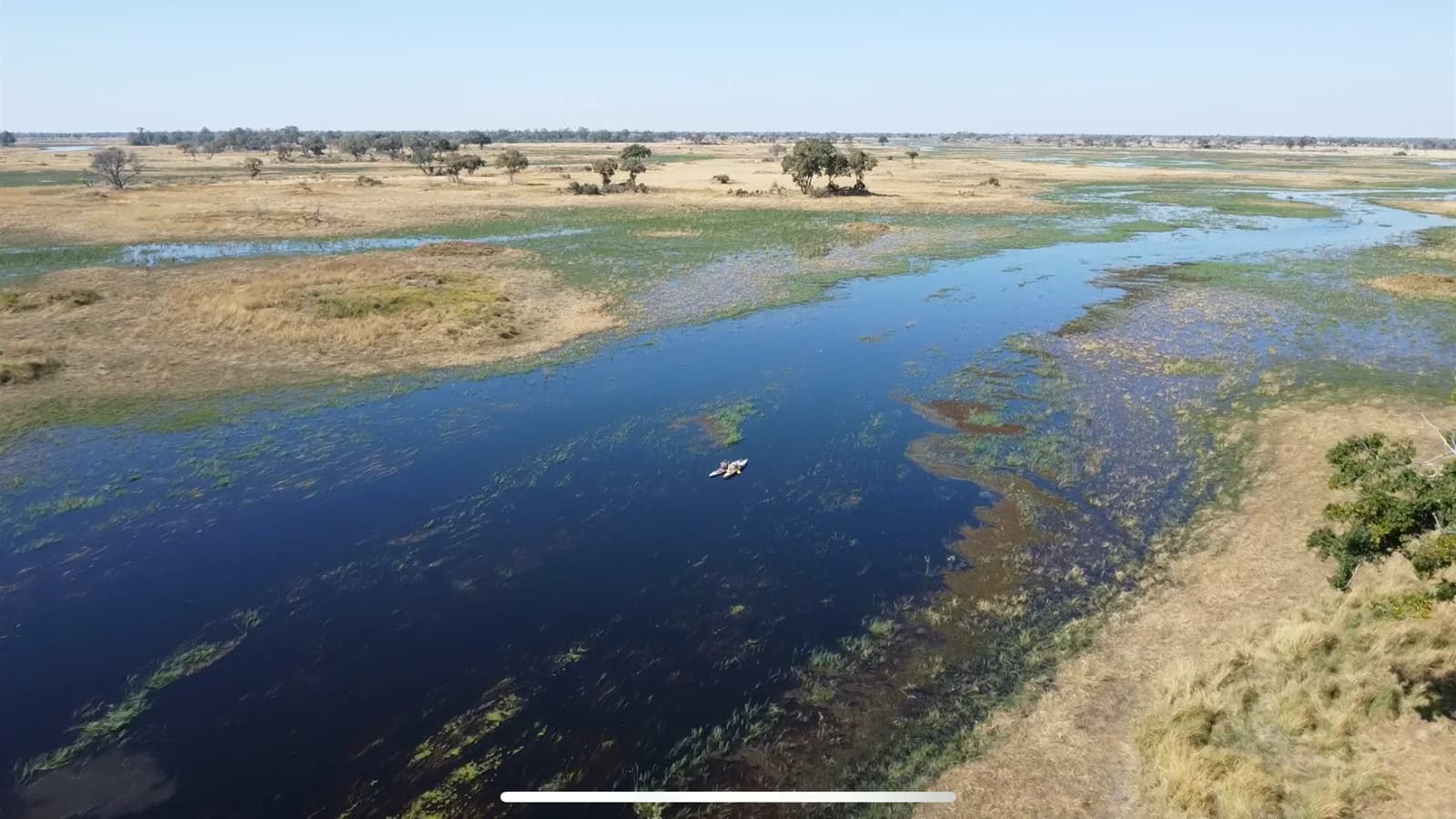
The Okavango itself is one of the most mental landscapes I've ever seen. People call it a river delta, but that does not really do it justice. It is basically a flooded desert. Water spills into the Kalahari and creates a giant maze of channels, lagoons and islands that looks fake even when we are sitting in the middle of it.
There are no roads. The water is the road. And it changes every year.
The first night
We spent the first night camped on an island near a pride of lions. Before this trip, I'd heard lions roar on television. It is not remotely the same thing.
A lion's roar in real life sounds less like an animal and more like somebody trying to start a V8 engine with vodka. The sound travels through the ground, through our sleeping mats. Somehow it is both terrifying and soothing — or maybe we just told ourselves it was soothing because there was absolutely nothing else we could do about it.
We woke with absolutely nobody else around, listening to hundreds of birds having what sounded like a massive row, watching the sunrise turn the water orange, and then went for a morning bush walk to see if we could spot the lions that had been roaring all night. After that, we tucked into a full English breakfast cooked over a campfire.
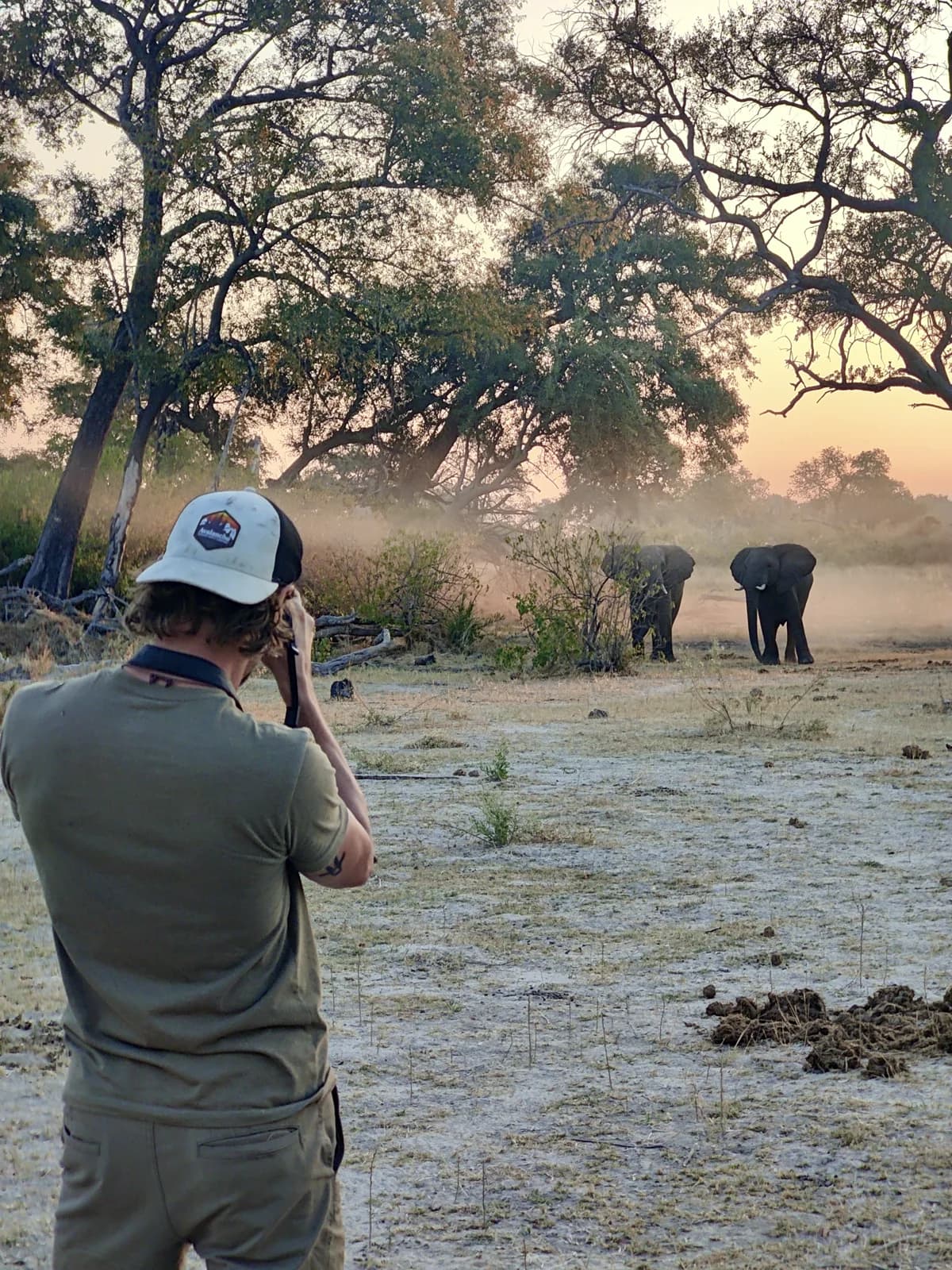
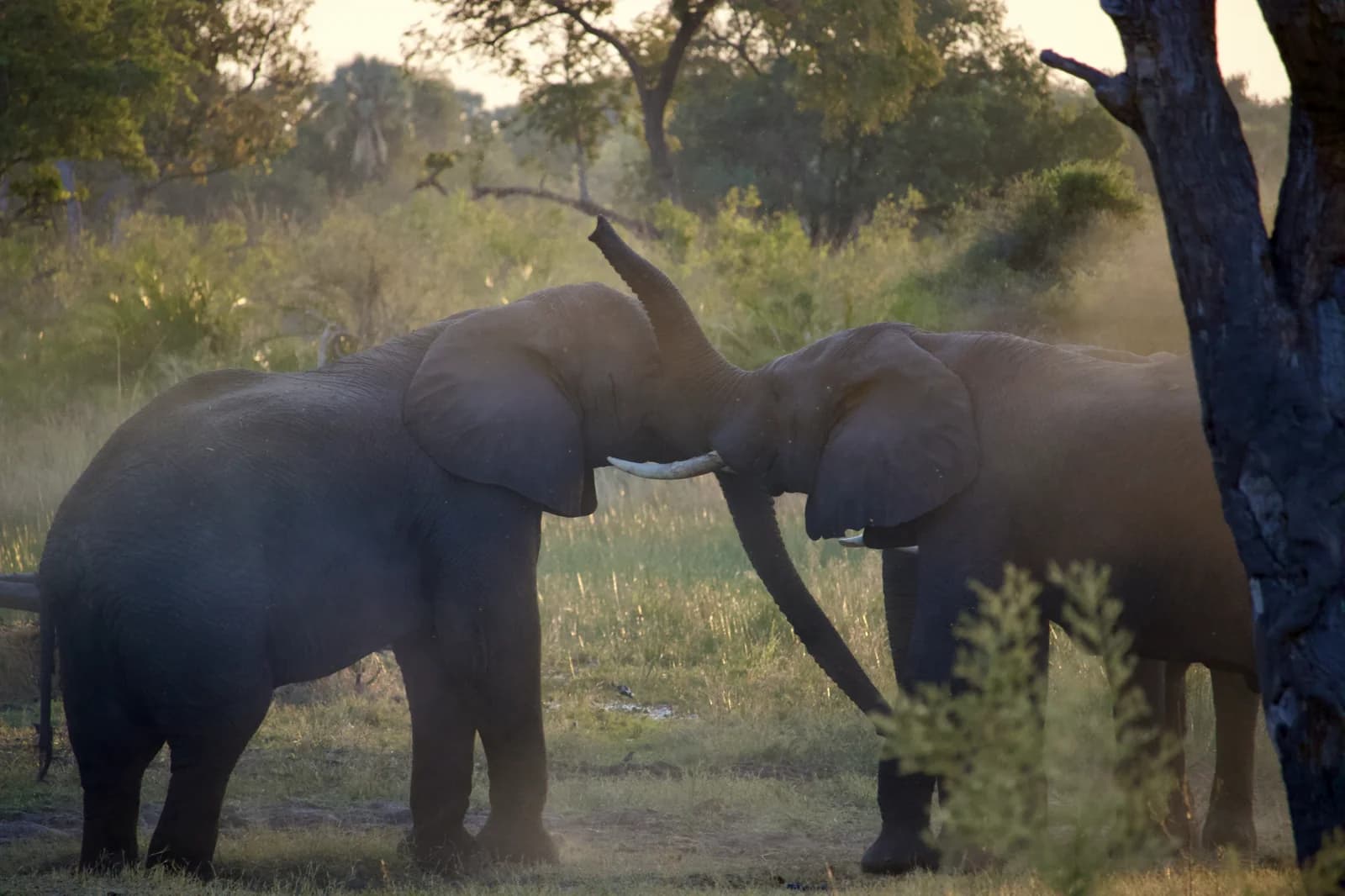
After eating too much, we climbed into a kayak and casually paddled past elephants on the way to the next campsite. The weird part is how quickly this starts to feel normal.
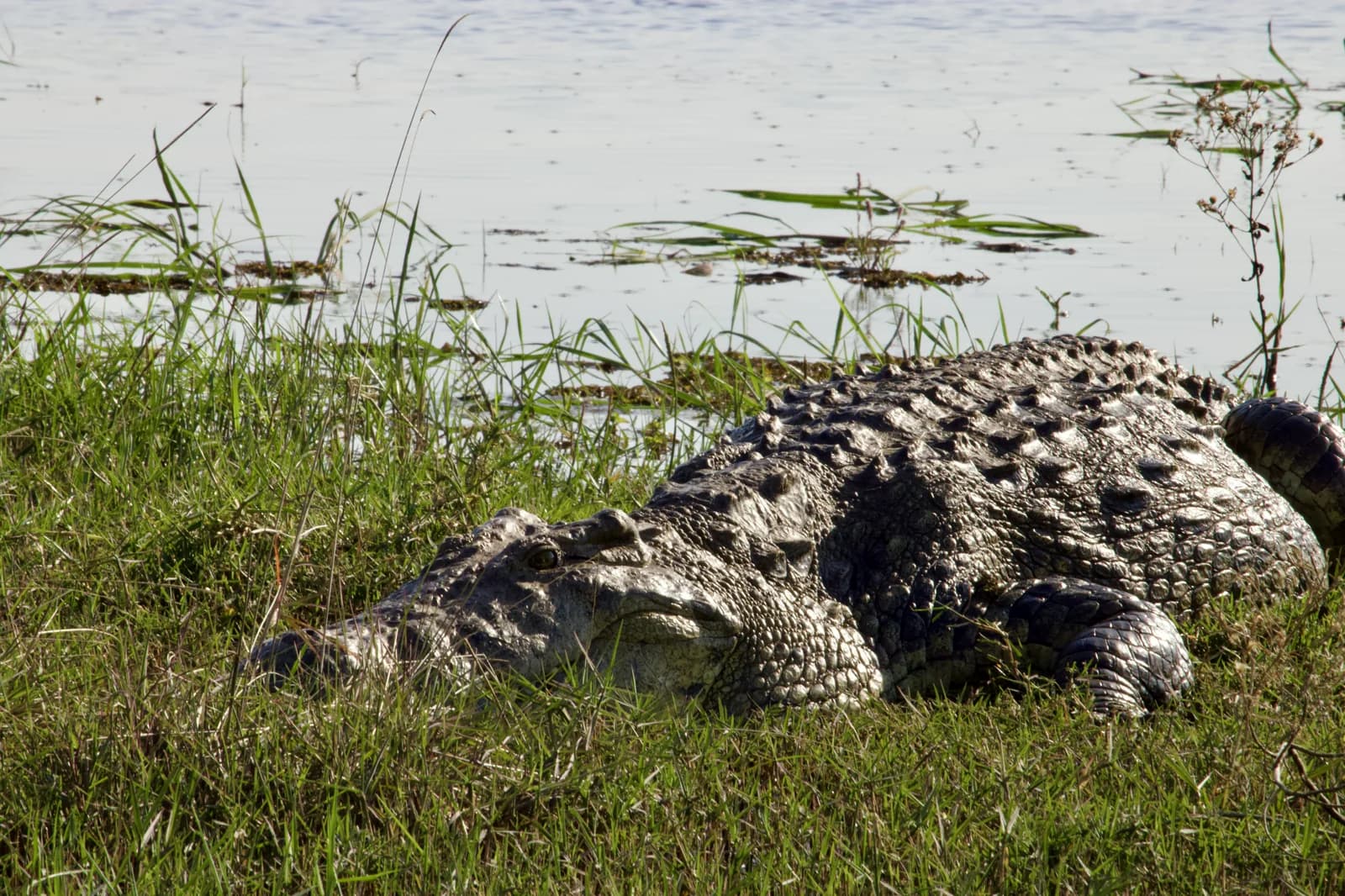
The first time we saw an elephant, everyone stopped paddling, reached for cameras and started whispering excitedly. By the end of the trip, we would glide past a herd while discussing how many crocodiles it would take to take down a hippo.
The rhythm of it
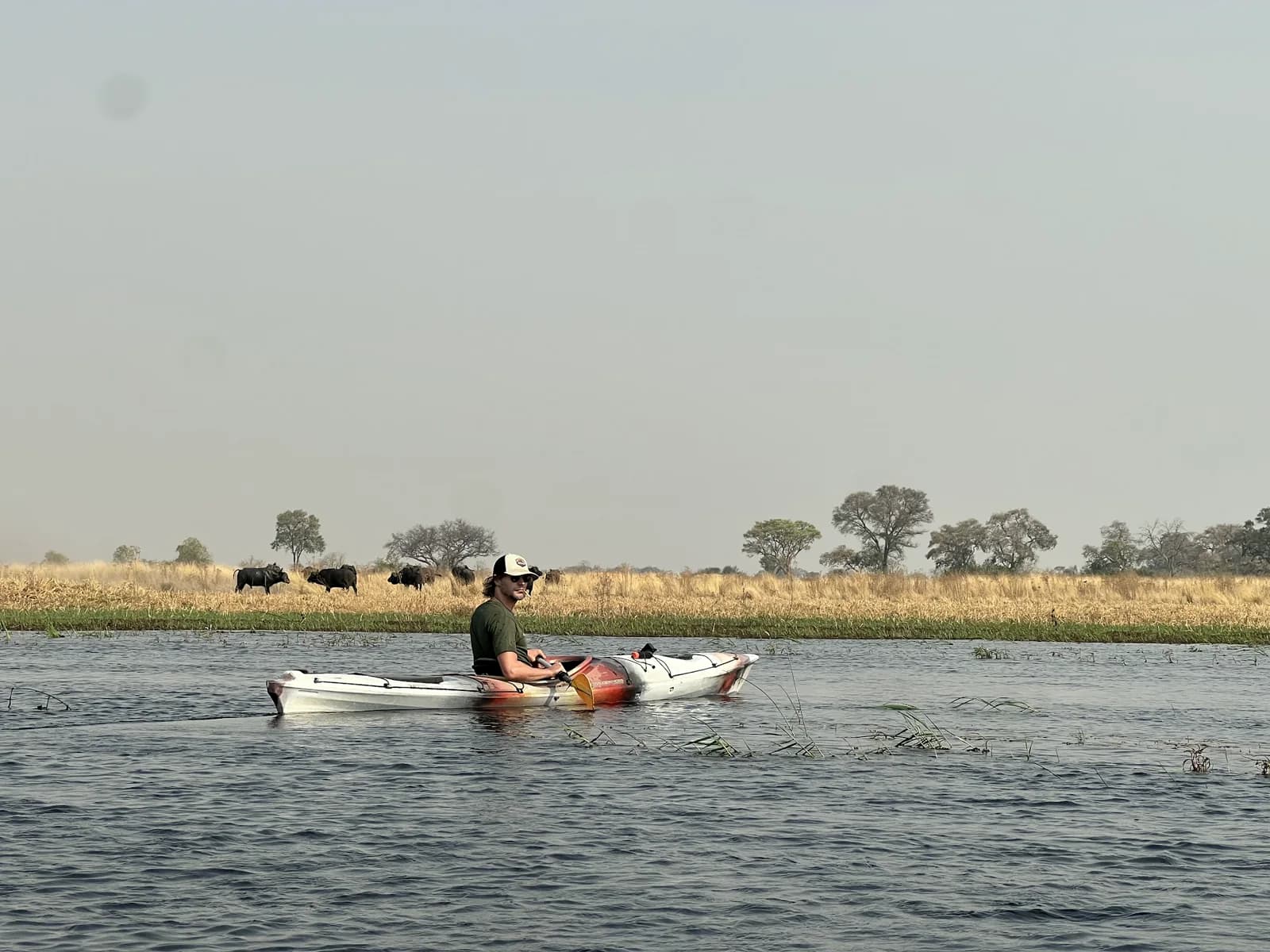
The following days followed a fairly simple pattern: wake up, drink coffee to cancel out last night's wine, eat too much breakfast, climb into our kayaks, paddle, stop for lunch, paddle some more, then continue paddling, camp.
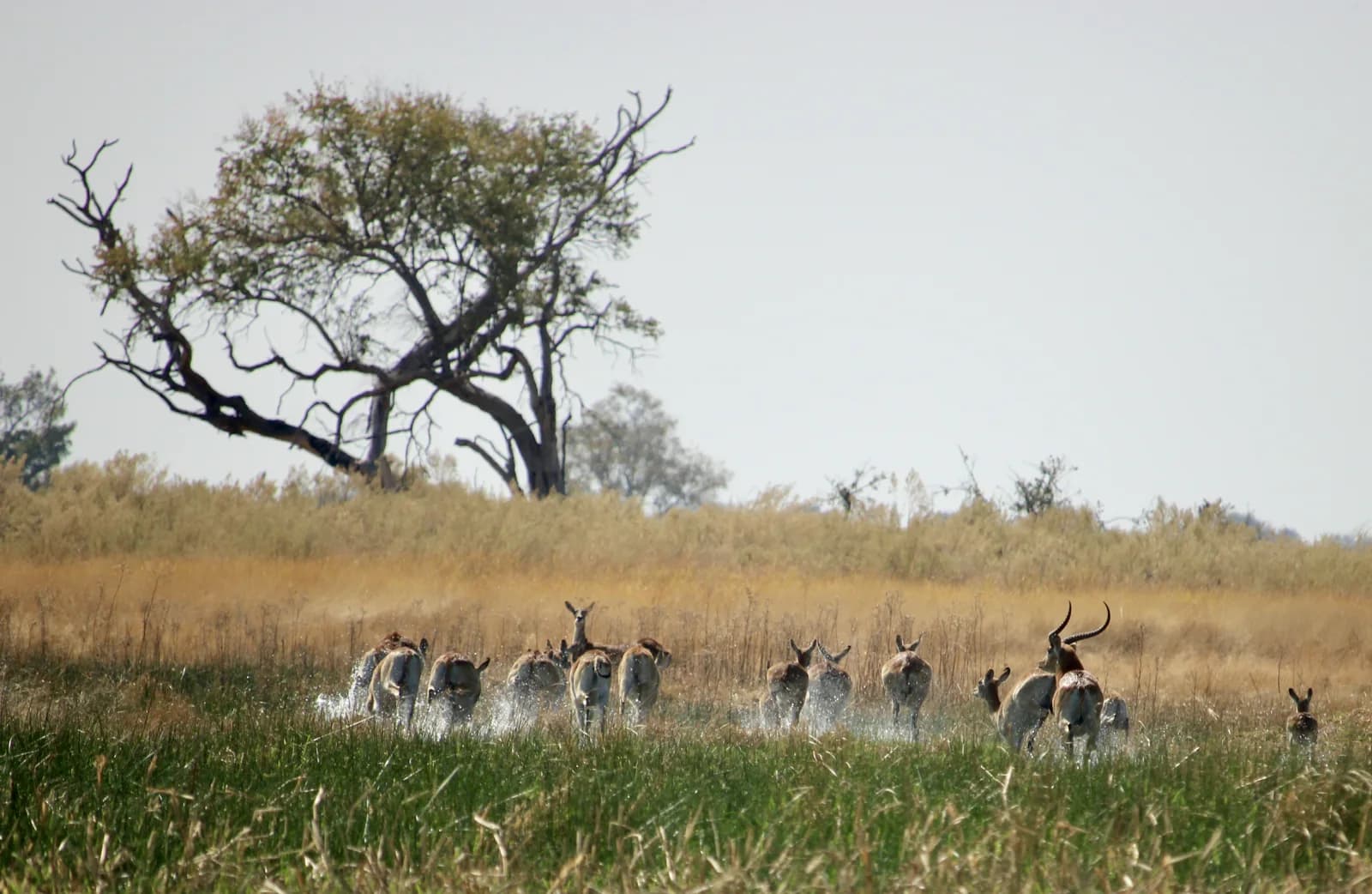
On the second day I remember hitting a patch of reeds that completely surrounded us. Through them I heard what I thought was some sort of old colonial freight train. It got louder and louder until I could catch glimpses of what was making the noise: massive herds of zebra, antelope and wildebeest rampaging through the shallow water after being spooked by something. It was an amazing experience to be at eye level with so much wildlife.
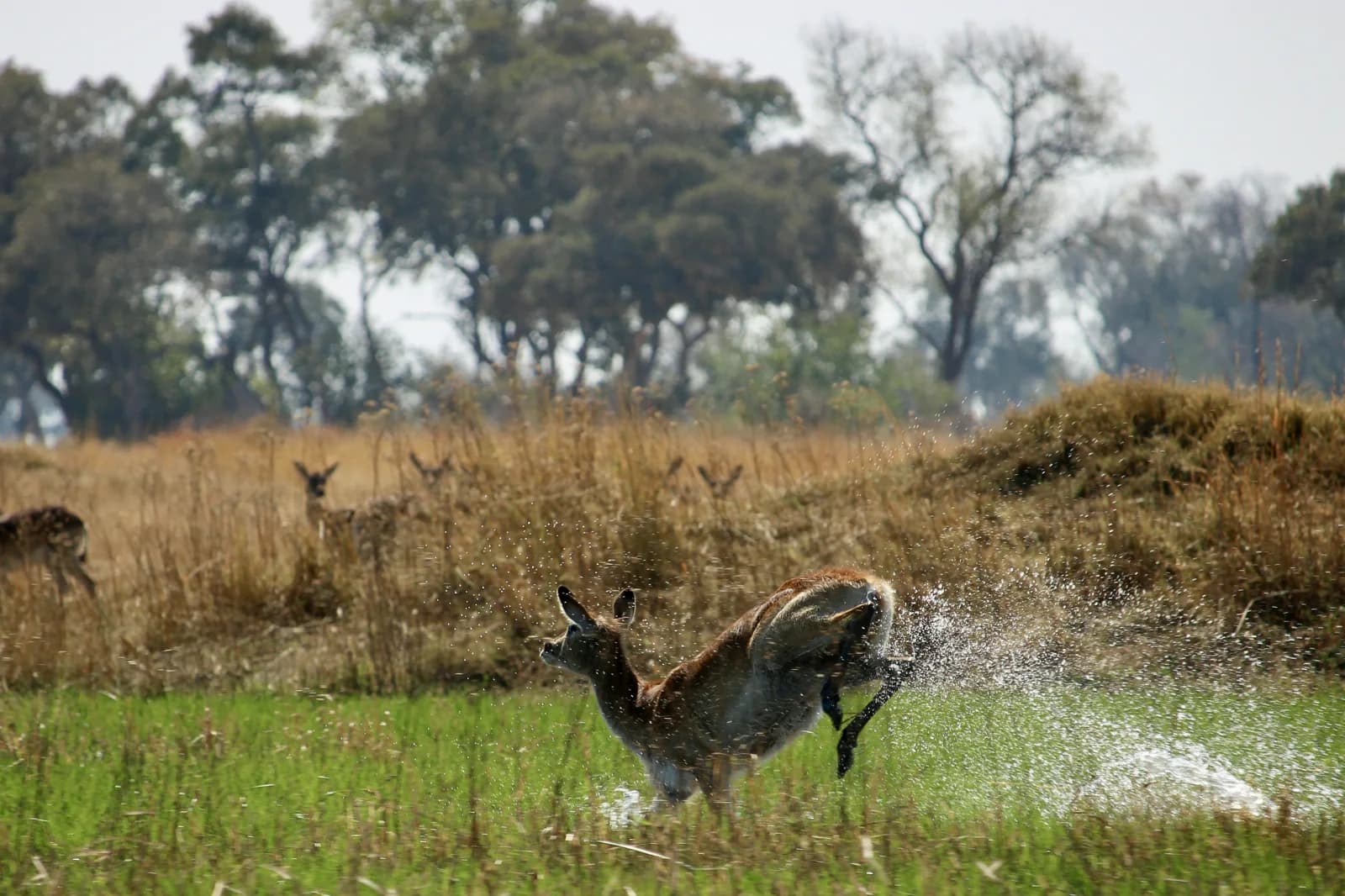
Despite the panic of the animals, everything slows down on the Delta. At first we had very sensible conversations about wildlife conservation, migration routes and ecosystems. By day three, we had learned how to jackknife one another's kayaks into a 180-degree spin and stash elephant poo in them to lob at each other later.
All the while, the wildlife never lets up. There is always a chance something large and inconvenient is wandering about nearby, ready to bring you back into the moment.
At night we lay under the stars listening to more lions, frogs, insects and every other creature in Botswana holding some sort of wilderness conference around camp. It is brilliant. It is uncomfortable. It is humbling.
Just before rolling into bed, I started to hear something else — something gentle that sounded like a cry. I fumbled around in the dark trying to find the source with my head torch. Eventually I found it. “Oh my God, it's the cutest thing I've ever seen in my life.”
It was a baby genet that had fallen from its nest in the tree. If you are wondering what a genet is, do not worry, I did not know either. It is not a budget broadband provider. It is a small wild cat-like creature that looked very surprised to be alive.
After watching it for a while, we decided to let it be. The cries stopped, and I like to think that was down to the mother carrying it back to its treetop nest.
Living with hippos
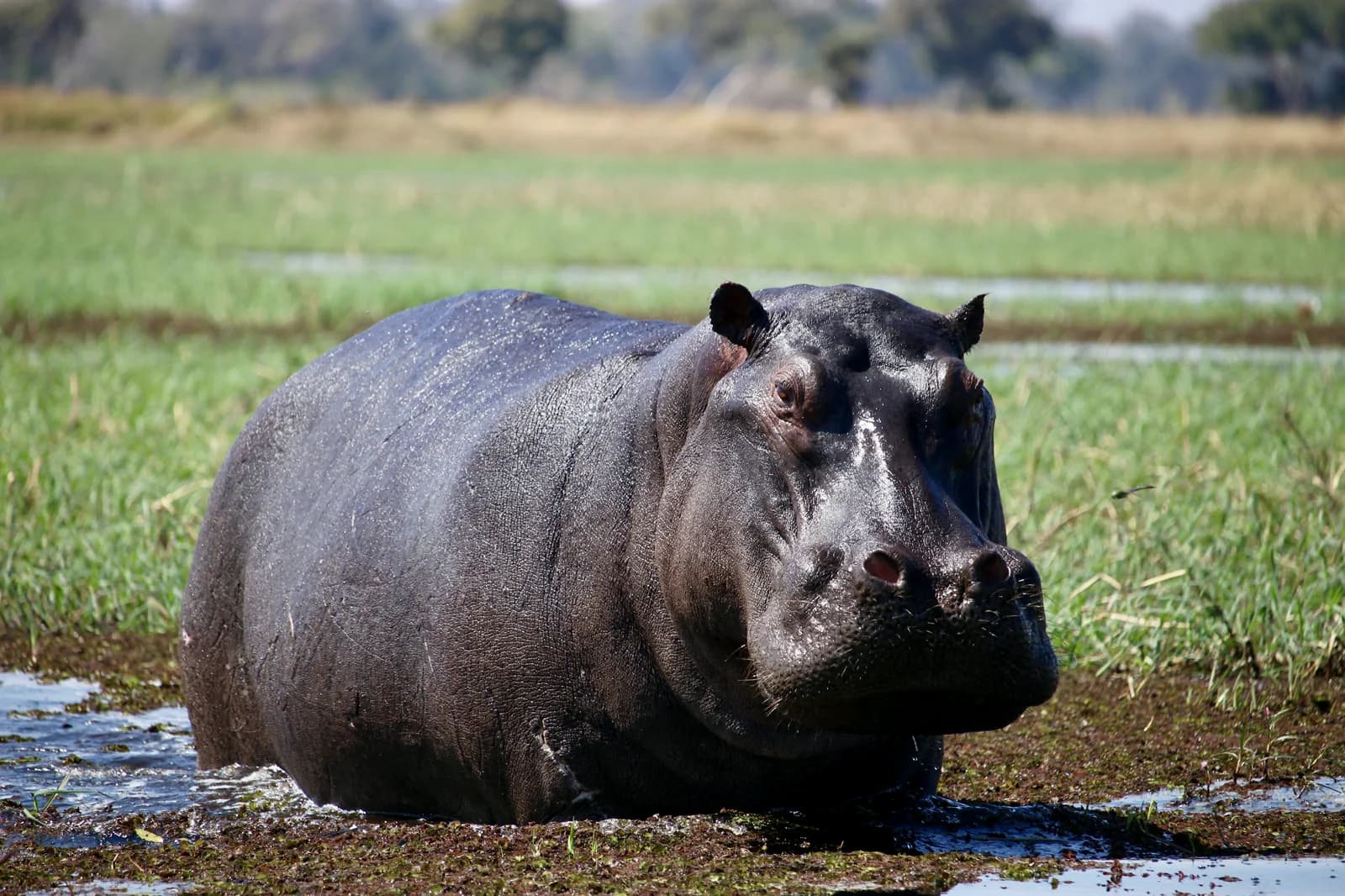
As the days went on, despite the complacency, the hippos were a constant feature throughout the journey. From a distance, hippos look almost comical. From a kayak, they look like several tonnes of bad decision-making.
We mostly pointed nervously at the water and asked whether we should be concerned. The answer was usually “not yet”, which is never quite as reassuring as we would like it to be.
But in all seriousness, John and the team could identify warning signs, safe distances and changing moods. They were exceptional at reading hippo behaviour and changing routes where necessary.
Back towards Maun
As the wildlife and isolation got more intense, eventually, after two weeks, we started making our way back towards Maun. Not before stopping at a local village, where we were invited to join a traditional dance.
After that, the wilderness gradually softened. Elephants became cattle. Hippos became donkeys. The channels widened. Villages appeared. Then dirt roads. Then, sadly, phone signal.
And suddenly everyone's mobile started vibrating as two weeks' worth of emails, missed calls and pointless group chats crashed back into existence. Yuk.
One minute we were drifting through one of the last great wildernesses on Earth, watching elephants at sunrise. The next, somebody wanted to schedule a meeting about a spreadsheet. The transition was not easy.
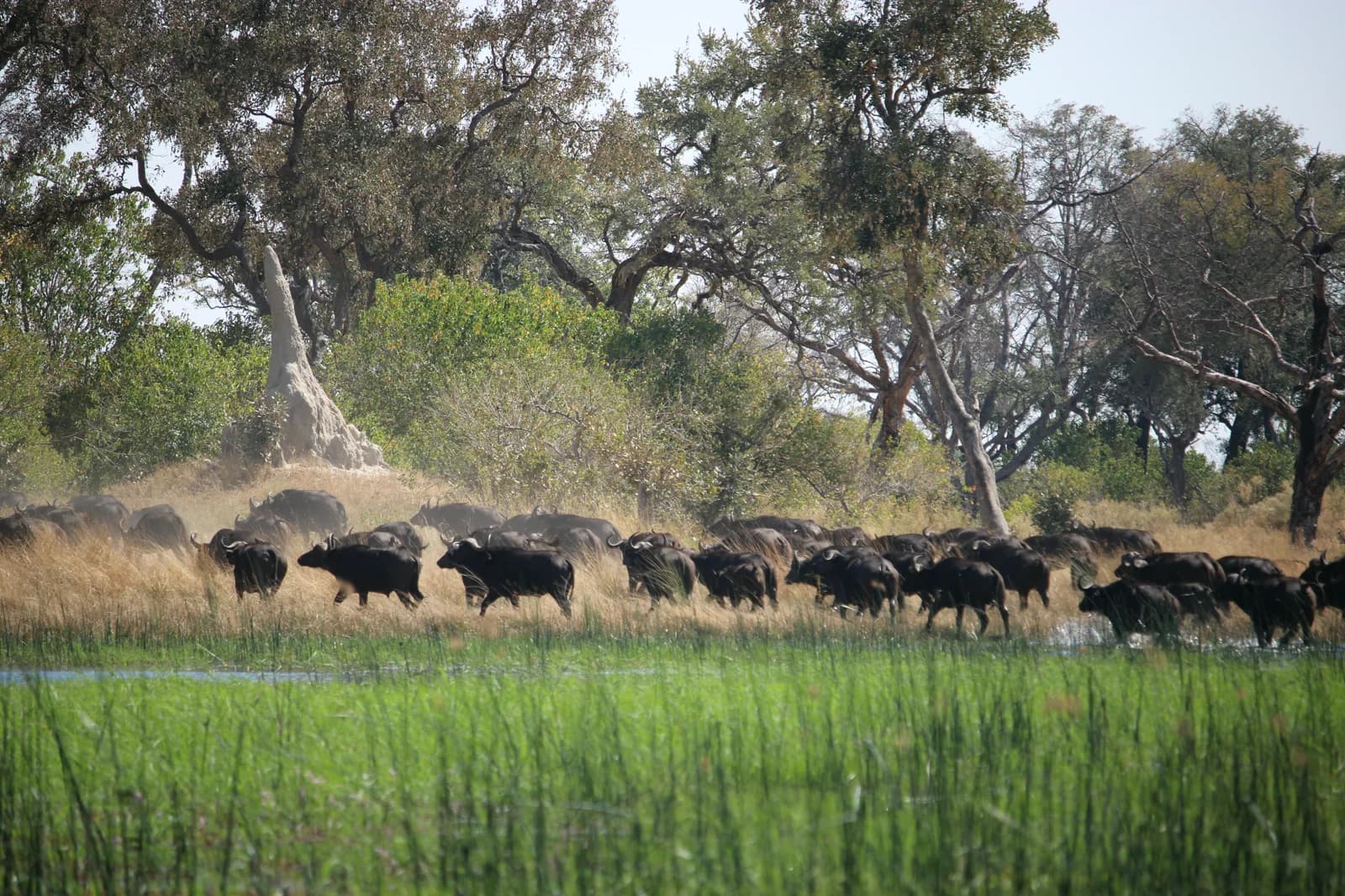
The Okavango remains one of the most extraordinary places I've ever experienced. The wildlife is everywhere. Elephants become an everyday sighting. Lions, hyenas, crocodiles, giraffes, buffalo, antelope, wildebeest and honey badgers all simply exist around you without fences, barriers or crowds.
The only other visitors we occasionally encountered were bougie honeymooners staying in fly-in safari lodges costing thousands of dollars per night. For 99% of the expedition, we saw virtually nobody: just water, wildlife, campfires and amazing stars.
It is wild, immersive, ridiculous, beautiful, occasionally uncomfortable and consistently unforgettable. If you enjoy total wilderness immersion, being just slightly closer to nature than feels entirely sensible, a healthy amount of chaos and the sort of stories that will somehow end up being told at every dinner party for the next decade, then this trip is very much for you. Safari? Completed it, mate.